Closing the AI skills gap
A proven Nordic-Baltic model for future media education
By Michael Frederiksen, Founder & Lab lead
27 Nov 2025
Case film from the latest edition of the Nordic-Baltic NextGenDemocracy Film & AIdea Lab.
Case film documenting the 2024 Copenhagen edition of the Nordic-Baltic NextGenDemocracy Film & AIdea Lab.
Media education is struggling to keep pace with AI. This lab demonstrates a model for the future.
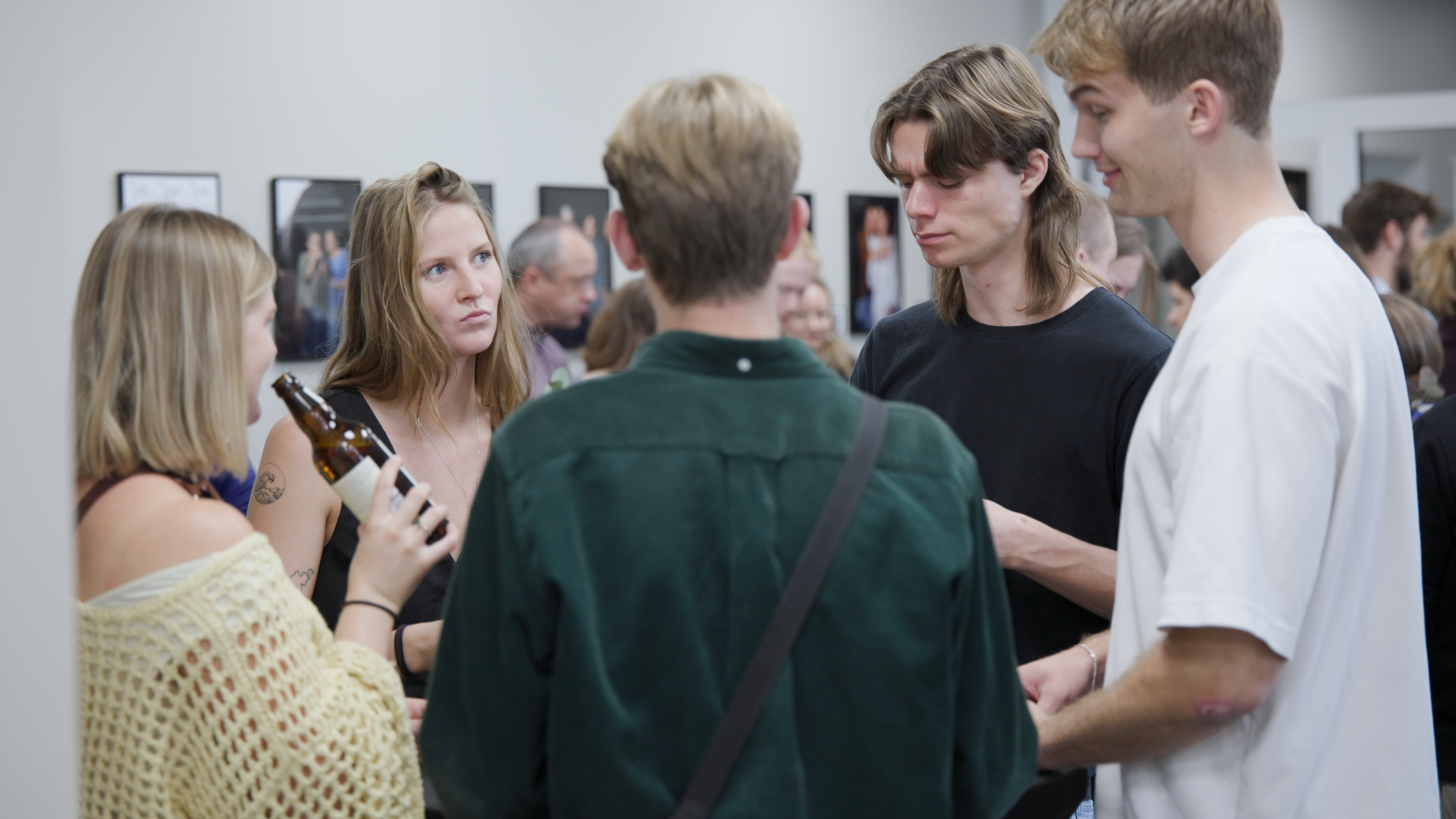
“Unique,” “transformative,” and “unlike anything currently offered.” This is how participants in the latest NextGenDemocracy lab in Riga for young journalists described the lab. This lab offers a proven model for what media education must become in an AI era. A space where students are equipped with advanced AI tools while simultaneously sharpening their critical thinking and ethical reflection in a single, coherent creative process.
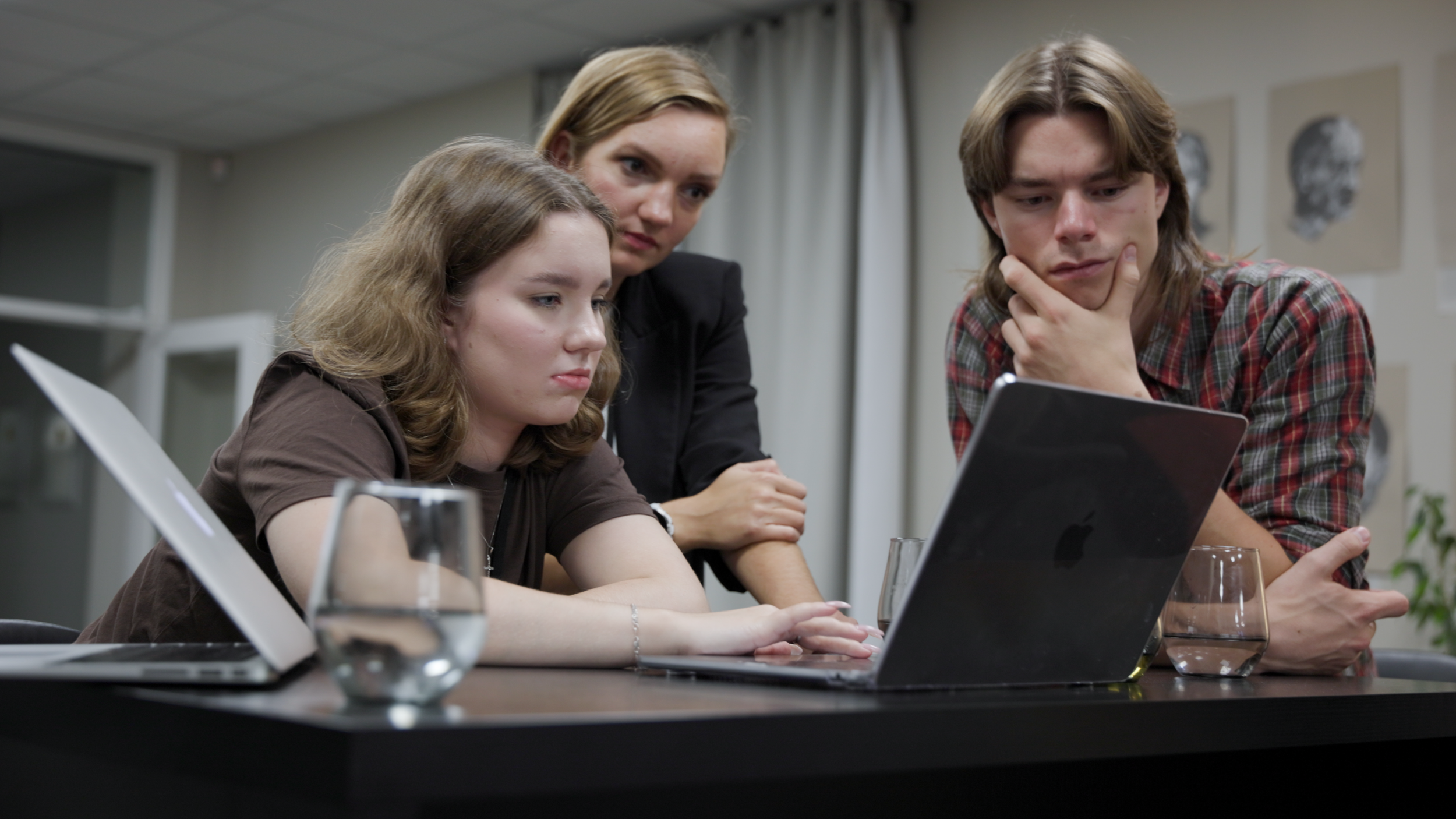
Young journalists were challenged with a real-world problem: How can media solve a young target group's AI-related problems? The lab combined expert insights with the facilitation of creative methods and emerging AI tools for filmmaking and content creation. The result was solutions with immediate societal relevance, ready for real-life implementation.
Immediate transferability
Several students applied their new skills to university assignments before the lab had even ended. Notably, a journalist from Delfi (the leading online news media in the Baltics) became directly involved in strategic discussions regarding new AI software investments immediately upon her return.
New professional roles for journalists
What truly stood out was the students’ ability to facilitate their own creative processes. Skills essential for editorial innovation and future documentary teams. Groups utilizing the lab’s CustomGPTs developed the strongest concepts, demonstrating that customised AI expands, rather than undermines, editorial judgment.
The shared global context
Working alongside peers from five countries, the students realised that the biggest challenges of humanity, synthetic media, declining trust, and AI taking control over personal lives, are global. This shared reality broadened their ethical awareness and sharpened their professional responsibility.
Can media students drive the re-invention of democracy and journalism?
1. Intro & case film
2. The awarded creative solutions
3. Learning outcomes
4. Lab methodology
5. Facts about the lab
2. The awarded creative solutions
View the award-winning films, judged on their solution and fulfilment of the task by an expert jury composed of: Mogens Blicher Bjerregaard (International Advisor, Danish Union of Journalists), Rane von Benzon (Journalist and Board Member, Danish Union of Journalists), Louise de Bourg (Young Media, Sweden), Lizaveta Dubinka-Hushcha (Beladania), and Michael Frederiksen (Lab Lead & Founder, NextGenDemocracy Film & AIdea Lab).
The young talents had to choose one of three urgent AI problems to focus on:
Young people risk AI software takes control of their personal lives, from intimacy to love, friendships, and personal development.
AI can generate content that looks real, which threatens cultural identity
The growing AI skills gap, education leaving young people useless
Their task was clear: To produce a maximum 2-minute case film that identified the root cause of an AI-related problem and delivered a media solution projecting a positive future scenario.
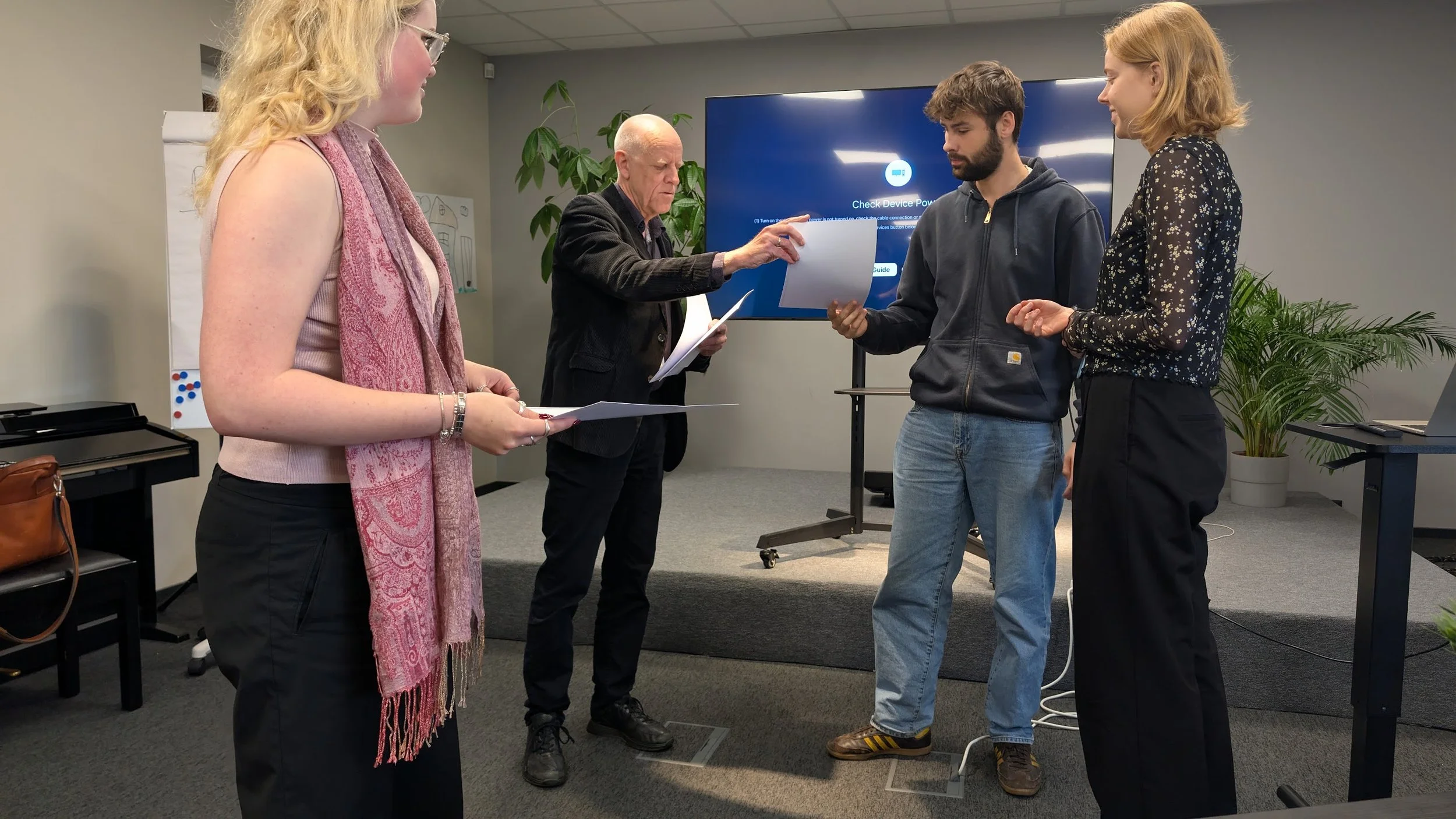
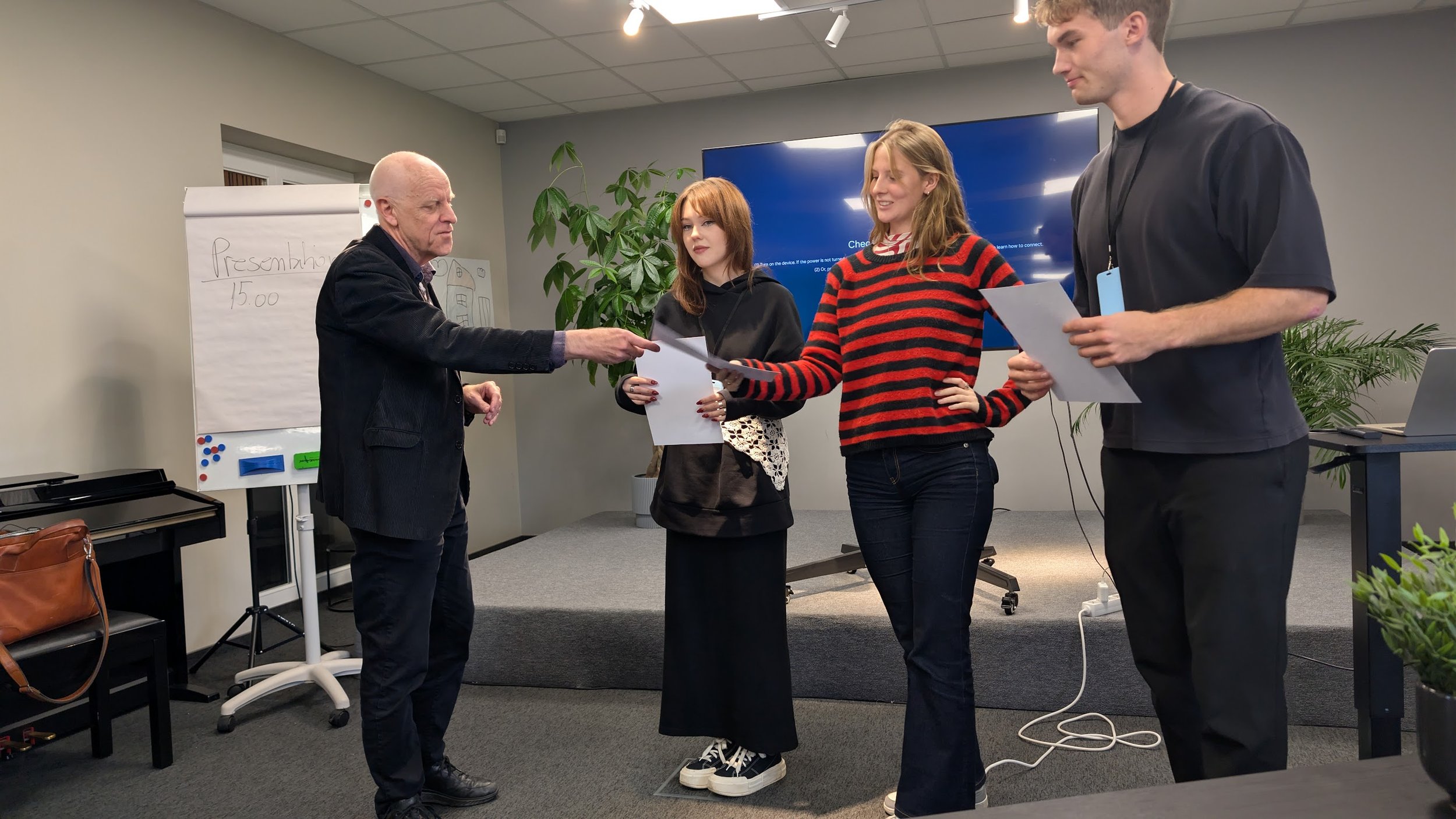
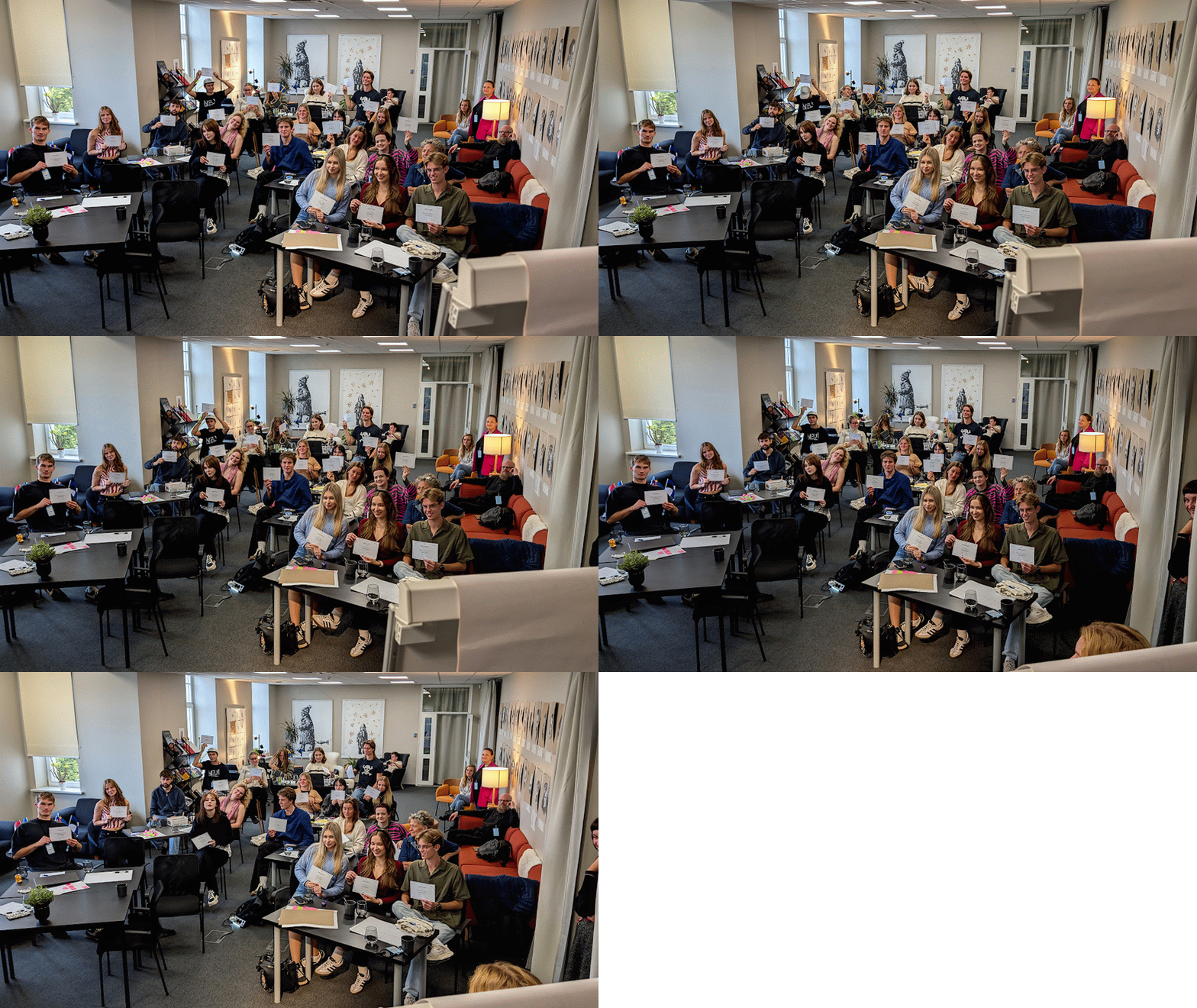
Innovation Award and Audience Award
- Authen
This film won both the Trust in Media Award and the Audience Award for developing a solution that tackles the challenge of defending authenticity in the age of synthetic media.
Problem: AI can generate content that looks real, which threatens cultural identity.
The jury selected this project because it powerfully illustrates the crisis of a generation that can no longer trust their own eyes. Second, the team delivers a groundbreaking solution: A digital "poison" embedded in the image file. This invisible shield disrupts AI algorithms, making the photos impossible to manipulate. By effectively immunizing reality against synthetic distortion, the team offers a concrete way to rebuild trust in what we see.
Humanity Award
- Reflector
This film won the Humanity Award for a solution designed to break the digital isolation of social media echo chambers.
Problem: AI-driven feeds polarize society by reinforcing existing beliefs.
The jury selected "Reflector" for its novel attempt to re-engineer social media to foster empathy. The AI acts as a "micro-journaling" tool that actively injects friction into the scroll. It interrupts the feed with "human reflections". Such as a note revealing a friend's opposing view or a prompt asking, "Why might someone disagree with this?" The jury praised this bold concept for using AI to open a window for curiosity and necessary democratic debate.
3. Learning outcomes
What students, partners and lecturers learned
Students left the lab with new competencies they could immediately use in their academic work, their creative processes and, for some, inside real newsrooms. The picture was remarkably consistent.
The Riga edition of the Film & AIdea Lab offered a rare insight into what young journalists need right now and what current media education is struggling to provide.
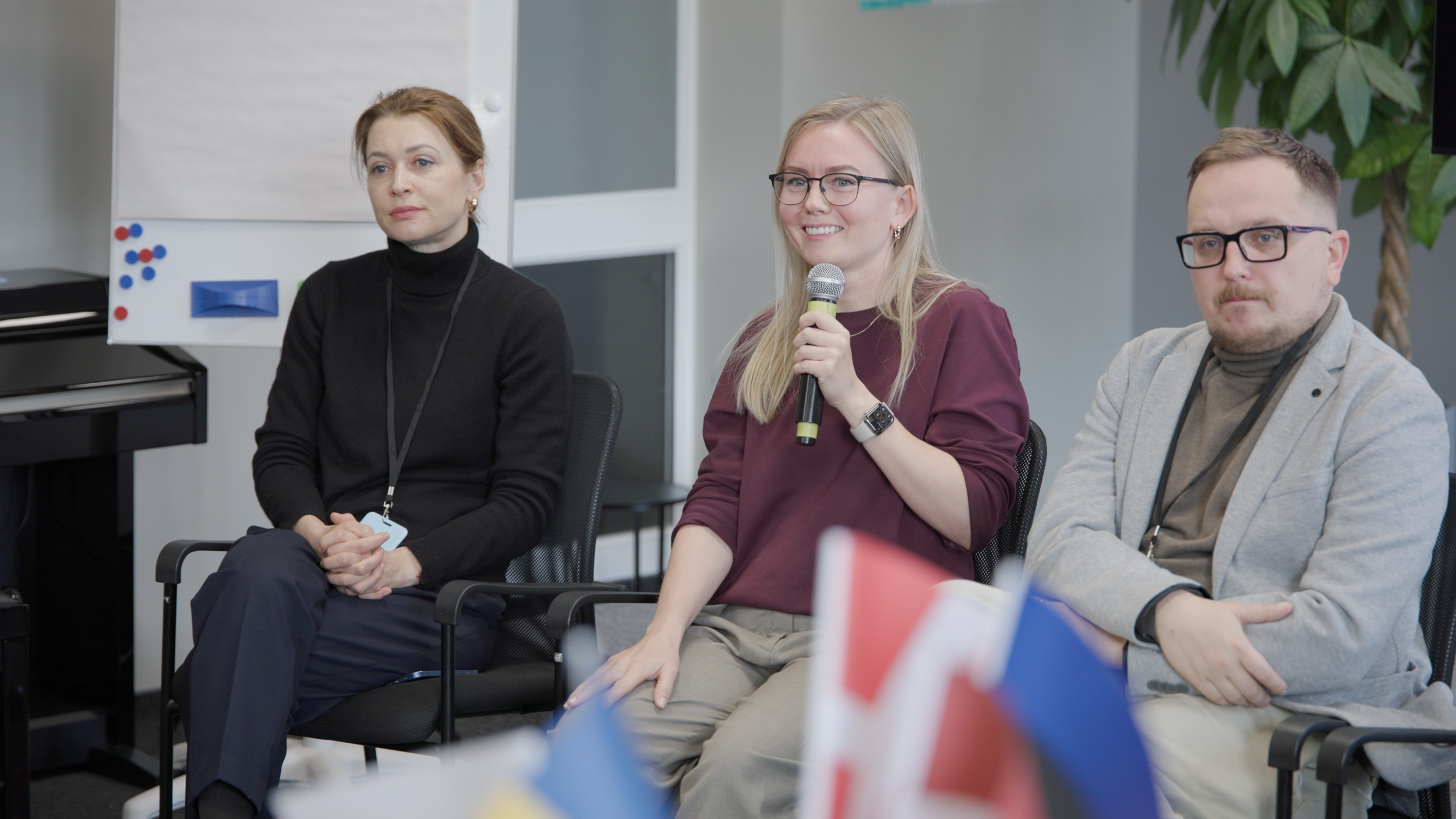
Based on interviews with three participating students, feedback from our Swedish partner, and evaluation meetings with lecturers from Denmark, Sweden, Latvia and the Belarussian lecturer.
Professional relevance and rapid skill transfer
All three interviewed students described how they applied AI tools from the lab directly into university assignments or work. A larger group of students before the workshop had even ended.
A participant from Delfi, the leading online newsroom in the Baltics, shared that her experience with AI-generated voice during the lab had already triggered internal discussions at Delfi about adopting new AI-software.
Creative facilitation an unexpected but essential skill
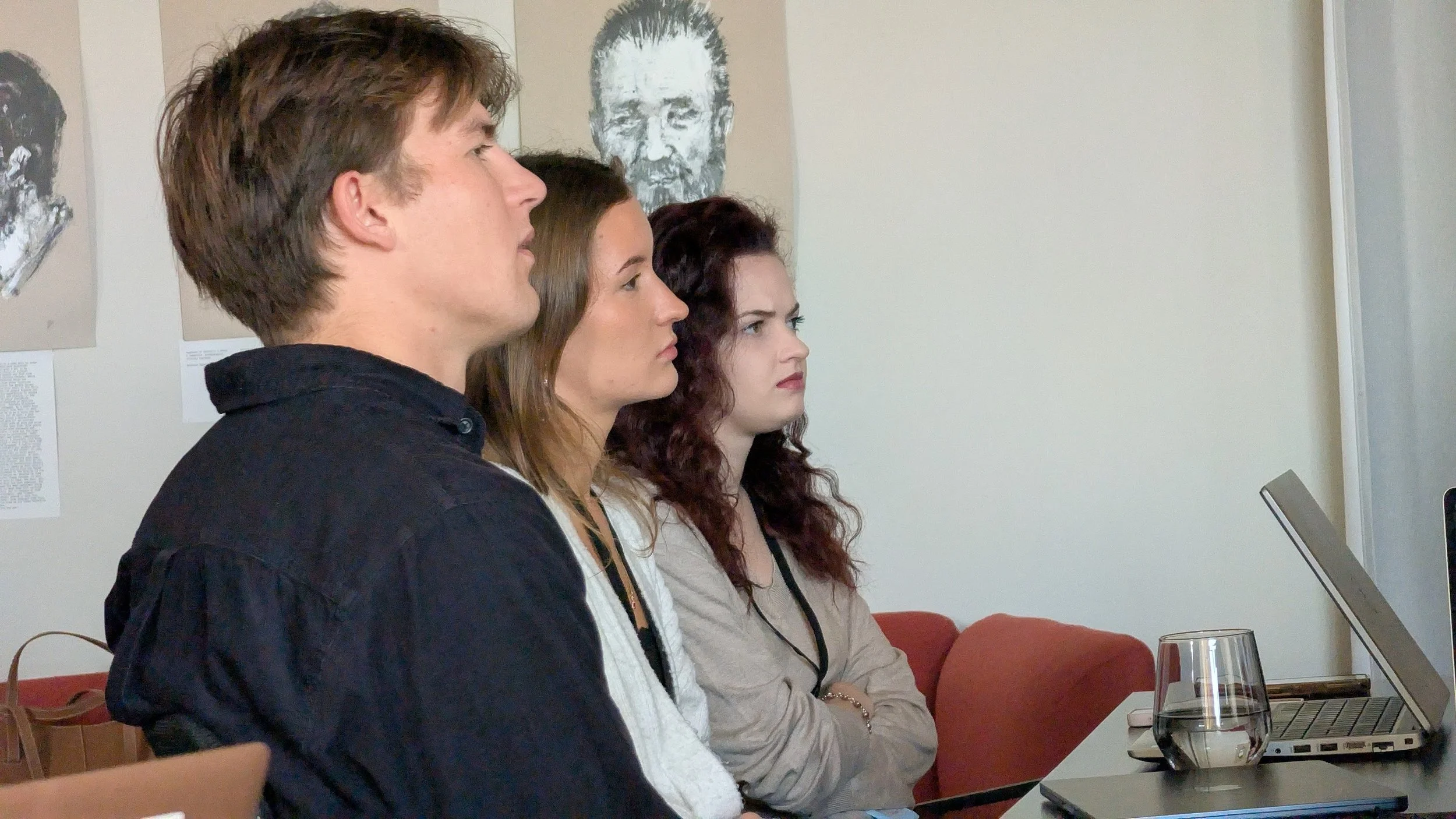
Especially the partner from Young Media in Sweden highlighted the value of learning to facilitate idea development, structure innovation processes and drive creative teamwork. Skills rarely taught in journalism programmes but central to editorial development, documentary production and investigative units.
The Swedish partner emphasised that facilitation was “the most important knowledge gap the lab filled”, and regretted that some international students did not immediately understand how relevant this is to journalism.
AI literacy that feels usable not abstract
Students praised the mix of AI-generated video, voice, images and text.
What mattered was not the novelty of the tools, but that they learned how to use them ethically, purposefully and in combination with critical thinking.
Groups who used the lab’s CustomGPTs delivered the strongest concepts, showing how customised AI can expand, rather than replace, human decision-making.
Intercultural learning and a broader ethical horizon
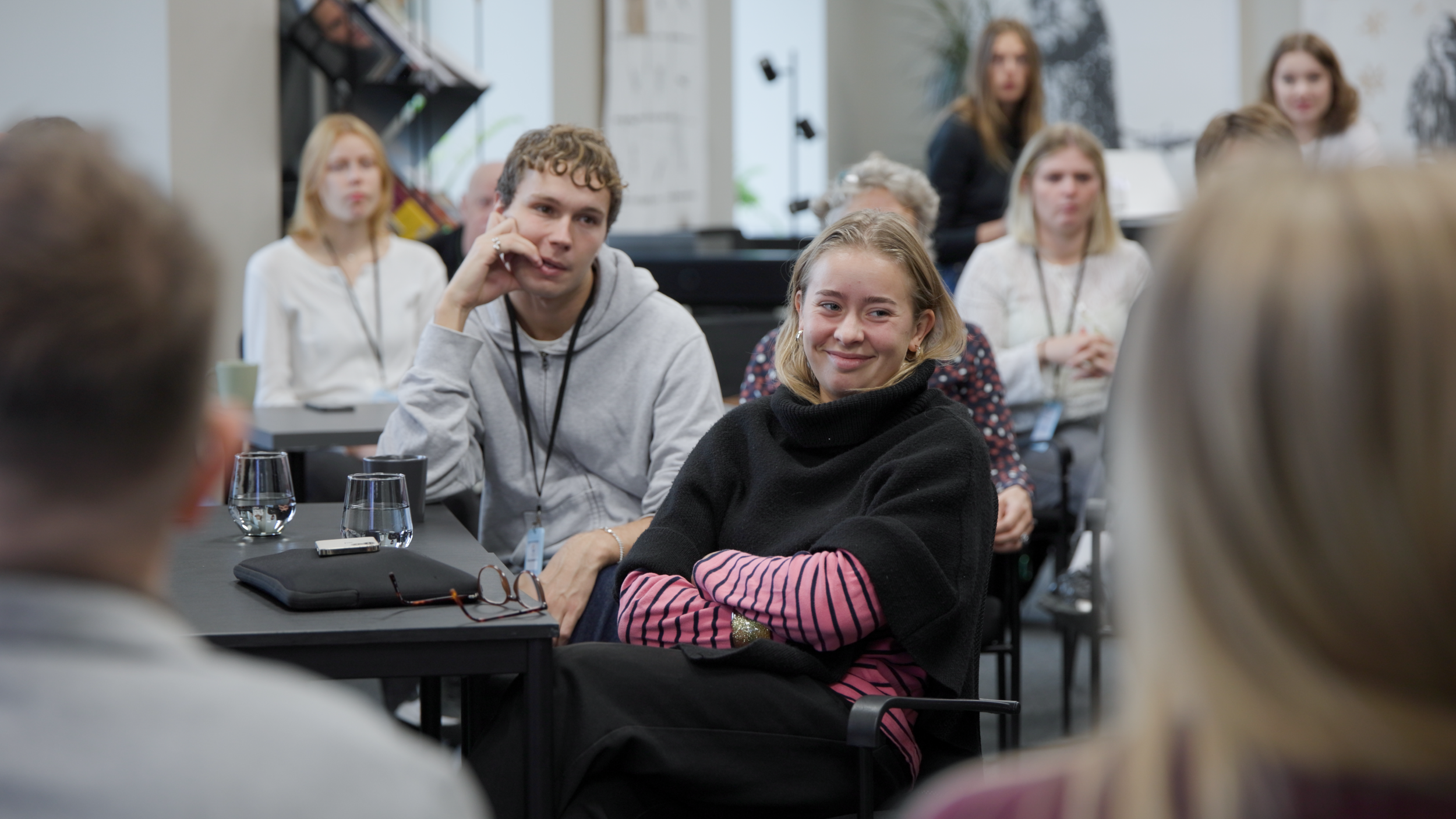
Working alongside peers from five countries deepened the students’ sense of journalistic responsibility. They recognised that synthetic media, AI disinformation and declining trust are shared global challenges. The intercultural aspect was described as “hugely valuable” and “one of the most inspiring elements” of the lab.
What educators learned
In follow-up conversations with lecturers from Denmark, Sweden, Latvia and Belarus, a shared picture emerged. The lab gave students something they do not normally encounter in their journalism programmes. They recognised that the combination of AI tools, creative problem-solving and structured facilitation pushed students into a more experimental, future-oriented way of working.
Recommendations for the next edition
Based on student and lecturer feedback, we will strengthen the following elements in future editions:
A deeper introduction to prompting techniques, CustomGPTs and AI agents
Sharing of students hand in documents during the lab for mutual inspiration
A bit more grounding theory for students who want additional context
A clearer framing of the design thinking elements even before the lab begins
A speaker lineup with with more debate afterwards
These adjustments will refine the experience but do not change the core finding: The young journalists from the lab are not just preparing for the times of AI. They have begun shaping it.

4. Film & AIdea Lab
- methodology
By Michael Frederiksen, Founder & Lab lead
27 Nov 2025
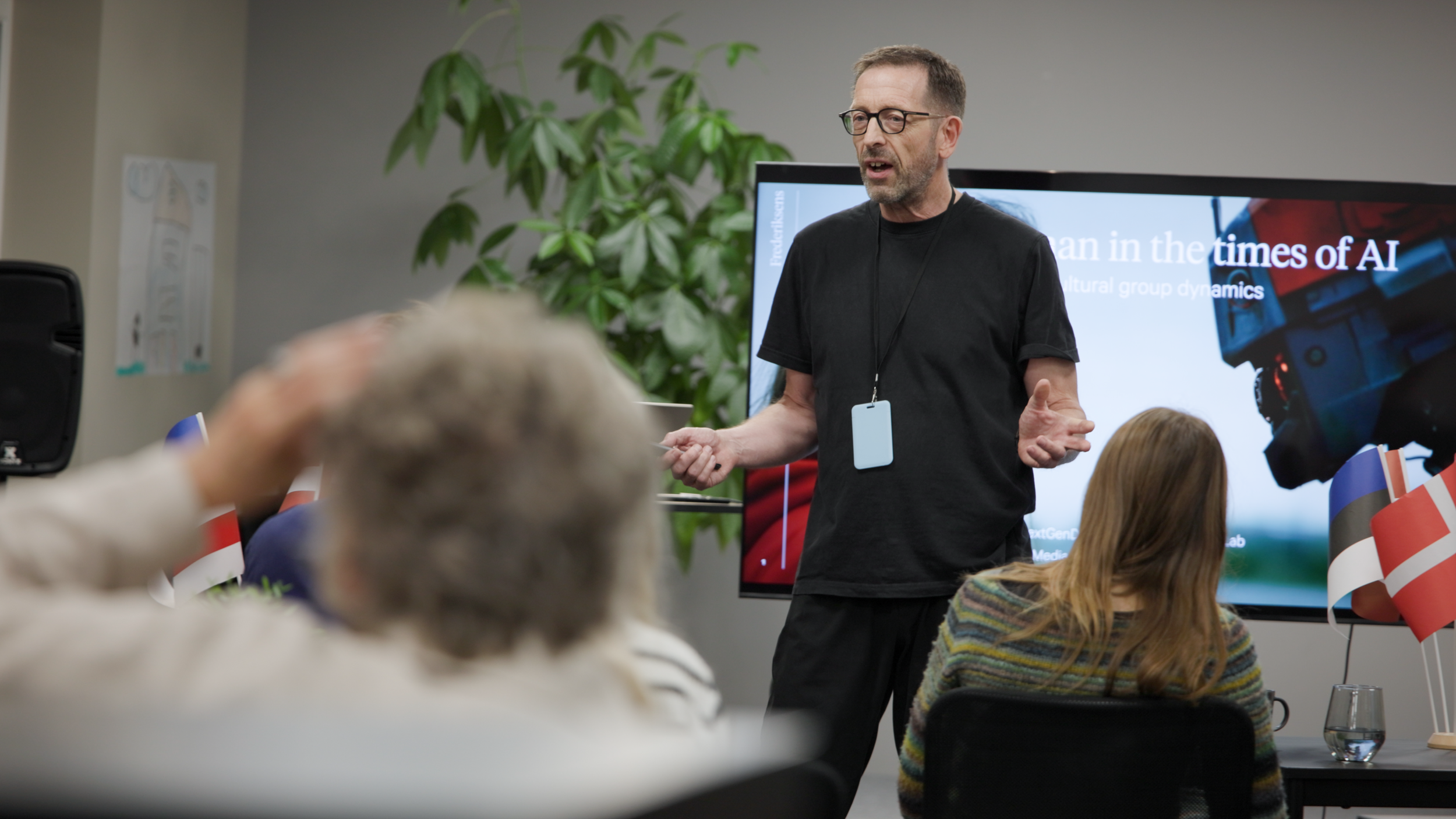
The methodology is tailored for young people to become active shapers of their own future at a time where human identity, culture, and democratic participation are being transformed by AI. The Lab is necessary because education needs their perspective more than ever. The format was developed and is led by Michael Frederiksen, Lab Lead & Inventor of the NextGenDemocracy Film & AIdea Lab format.
Through mastery, students strengthen their critical thinking, creativity, and confidence, providing a proven model for future education.
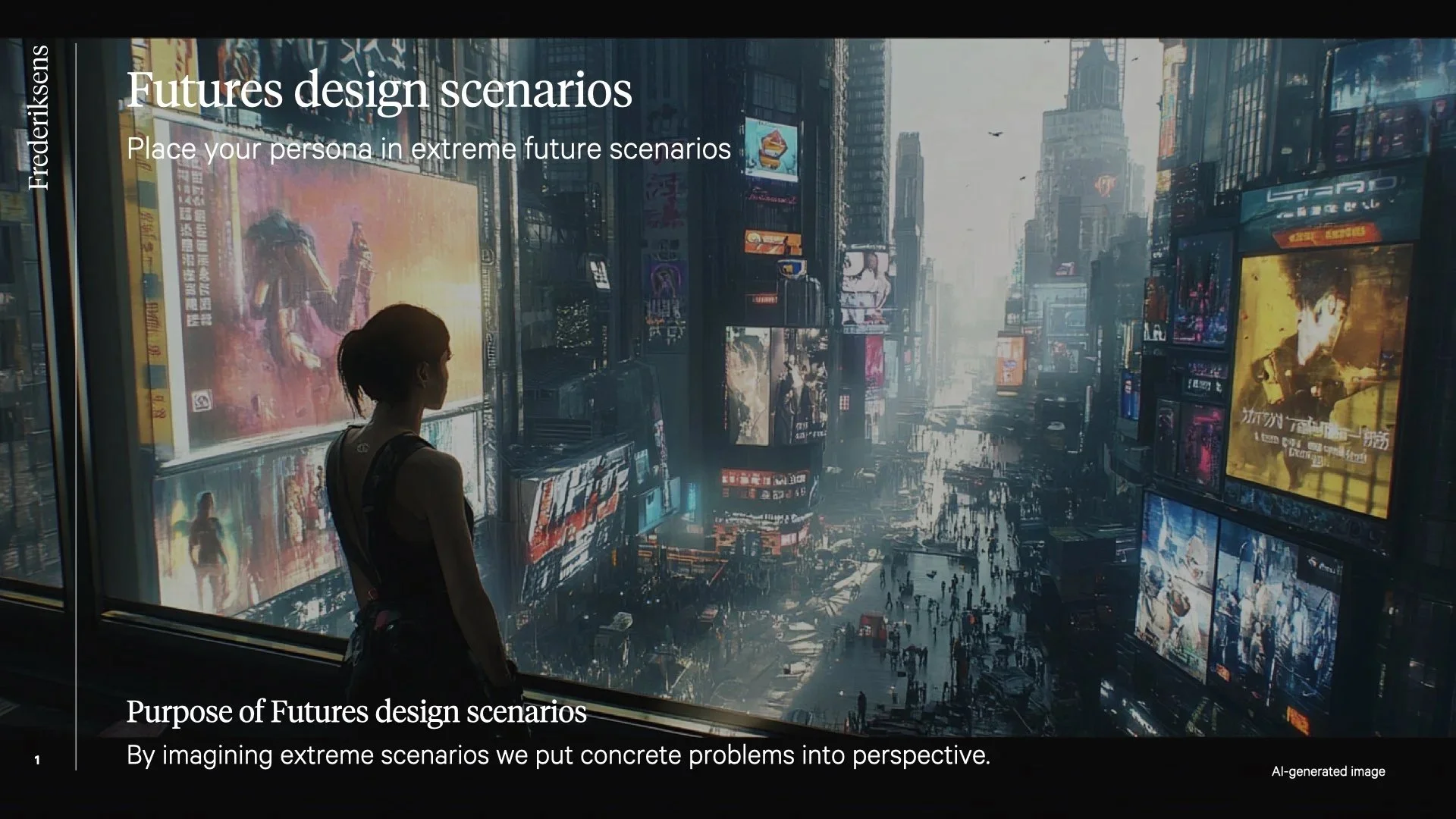
The core method, developed by Frederiksens since 2020, combines human ethics and AI, strategic planning, design thinking, journalism, and filmic storytelling. It is founded on the Double Diamond innovation process. The key to mastery is a precise focus on one specific problem, making both creativity and filmmaking easier.
Digital playbook for creative process overview
The playbook is the digital focal point that guides students step-by-step through all phases of the design thinking process.
It ensures that all AI tools and guidelines for hybrid film production and innovation are integrated into one cohesive learning sequence.
The lab unfolds over three intensive days
Day 1 focuses on problem understanding (Discover/Define). Students use Empathy Mapping to identify ethical "pains" and determine the root cause of AI challenges.
Day 2 is dedicated to creative development (Ideation). AI is integrated for idea generation in various expert roles , and concepts are refined through feedback from specialists and testing on synthetic personas.
Day 3 culminates in producing a maximum 2-minute case film to sell the solution. All processes are fully supported by Generative AI, utilizing a hybrid production model (traditional footage + AI clips).
5. Facts about this lab
Duration
A 4-day lab held in Riga.
Participants
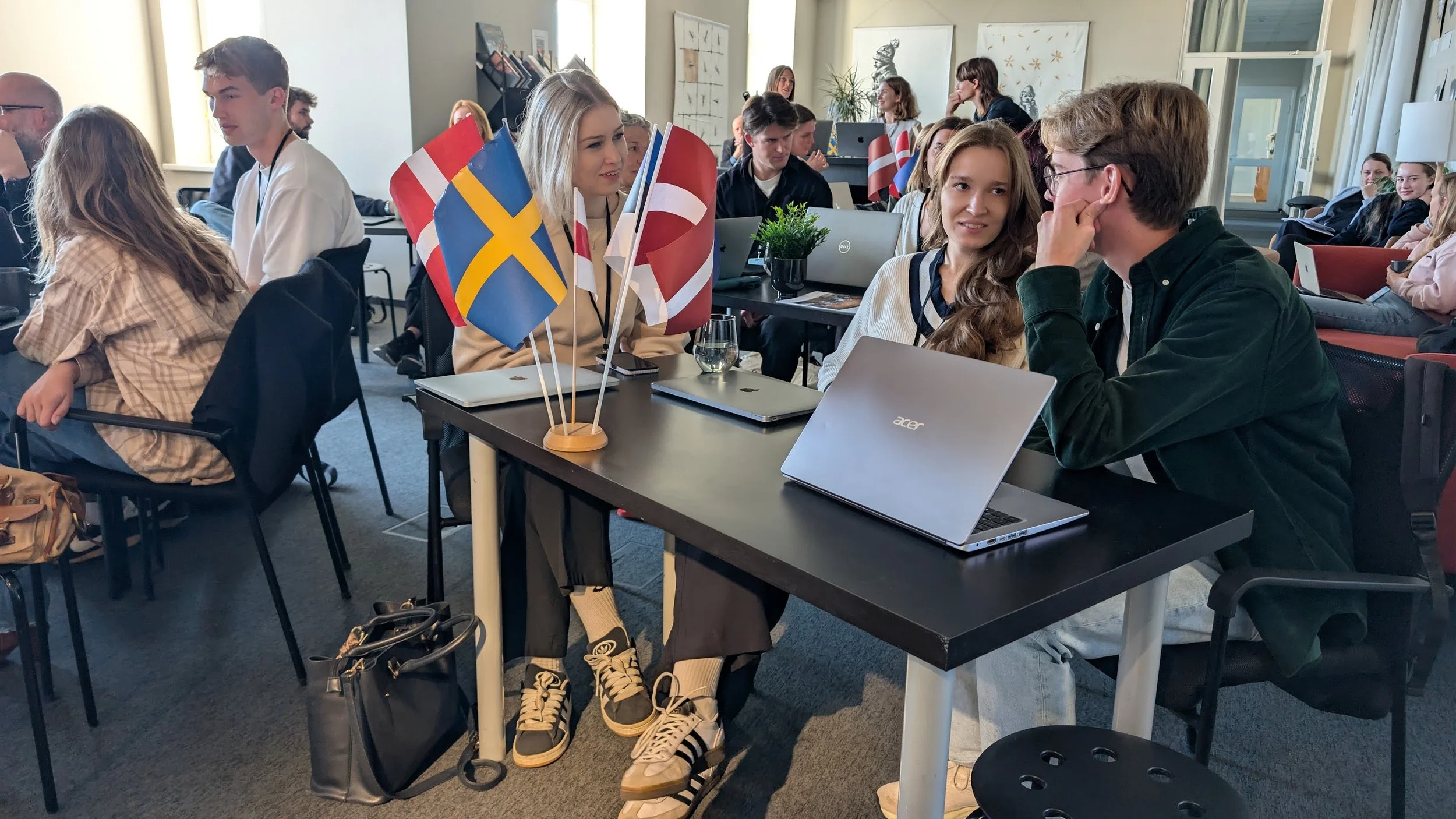
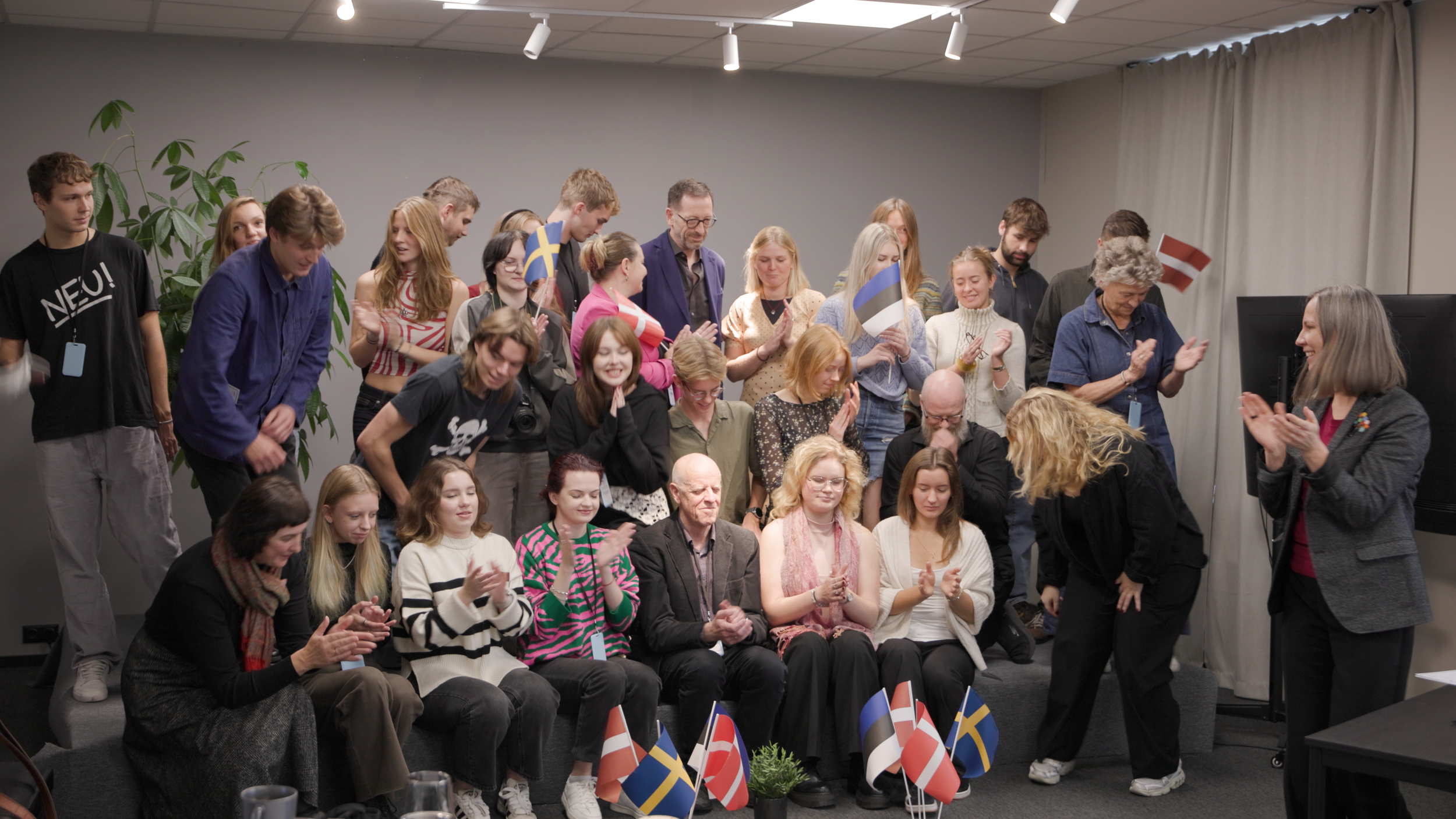
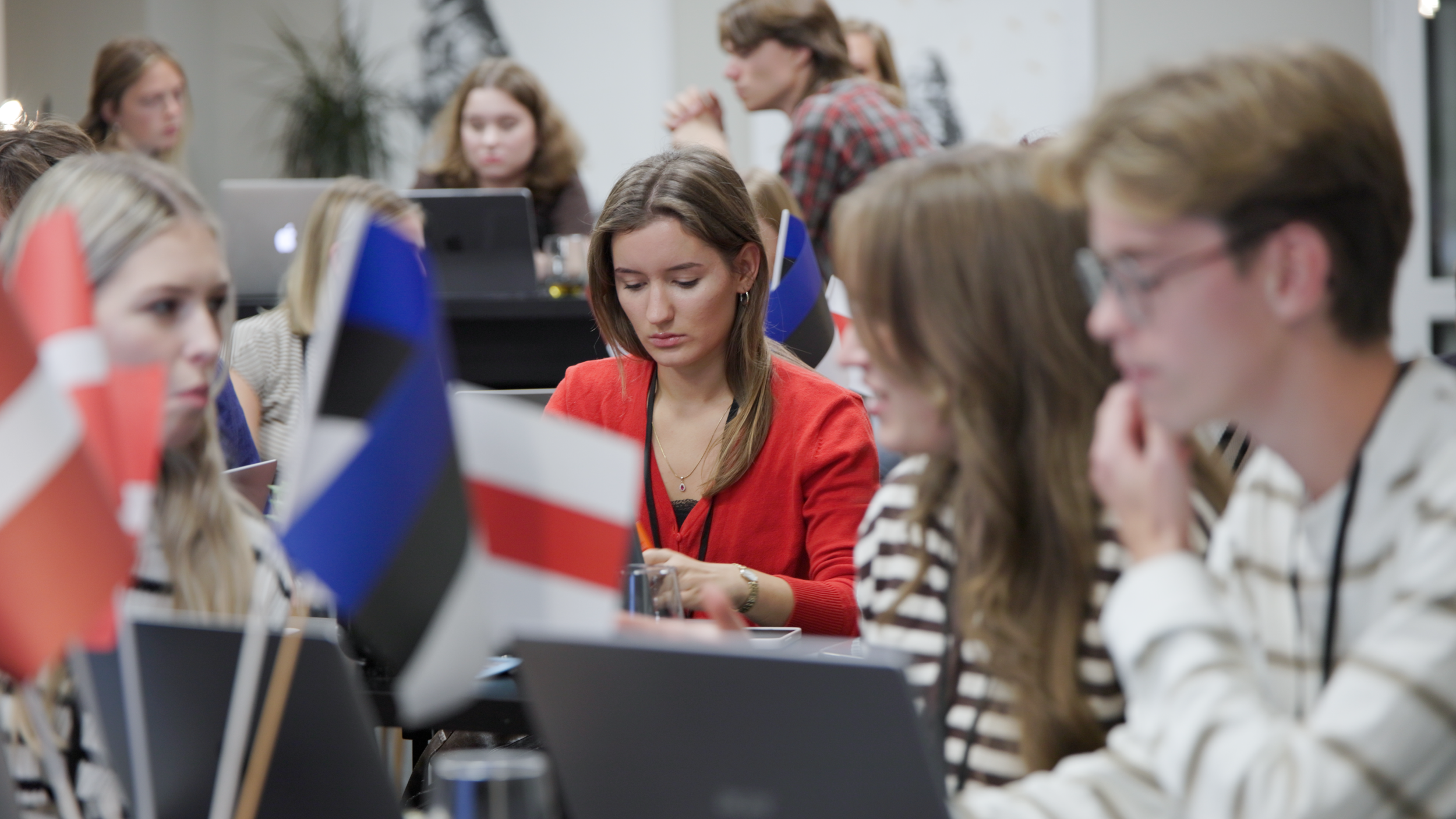
21 journalism and media students from Sweden, Latvia, Estonia, Belarus and Denmark. Partners, lecturers, consultants.
Client
Danish Union of Journalists.
Funding
The Nordic Council og Ministers.
Expertise
Guest speakers from Google, Delfi, The Metaverse Center, Rīga Stradiņš University and NewEast.