Human in The Times of AI
Case study: The UN City Lab for high schools
By Michael Frederiksen, Founder & Lab lead
27 Nov 2025
This lab shows that when young people are offered professional methods, they master AI at record speed. They produce immediate, ethical solutions that meet society's needs.
The most important recommendation is therefore to implement this type of lab process in the education system, as students are the most qualified creators of the ethical solutions for their own future.
The lab proved that today's high school students are more than just future recipients of AI changes. The lab serves as a crucial model for the education sector and society. We must actively utilize students’ ideas on a large scale. These ideas represent not merely school projects, but highly valuable solutions to the AI era’s most pressing ethical and cultural challenges.
The students’ films demonstrated an impressive breadth that far exceeded the project’s expectations for the three problem areas. This spans from practical, responsible AI applications to artistic warnings: Little Tutor (responsible AI collaboration) and Co-create (ethical AI in film production) deliver concrete tools to guide youth in responsible AI usage. In a Futuristic World created a work of high artistic quality that reminds society of the threat that we are losing the ability to distinguish false from genuine content. The Offline Show challenged digital consumption culture itself by creating a format where young people can meet their algorithm to learn to put down digital devices and rediscover the "original human."
Did the students ideas genuinely inspire a shift toward an ethical AI future?
1. Intro & lab film
2. The awarded creative solutions
3. Learning outcome for the students
4. Learning outcome for lecturers
5. Lab methodology
6. Facts about the lab
2. The awarded creative solutions
View the award-winning films for each problem statement, judged on their solution and fulfillment of the task by an expert jury composed of: Thomas Kryger Andersen (Principal, U/NORD Hillerød), Henrik Faaborg (IT Chief, U/NORD), Aslaug Kleve (Board Member, NextGenDemocracy), and Michael Frederiksen (Lab Lead).
The young talents had to choose one of three urgent AI problems to focus on:
Why our AI skills don't match the job market.
AI-generated content is killing media trust.
The risk of losing critical thinking and the ability to learn when AI completes our tasks.
Their task was clear: To produce a maximum 2-minute case film that identified the root cause of an AI-related problem and delivered a solution projecting a positive future scenario.
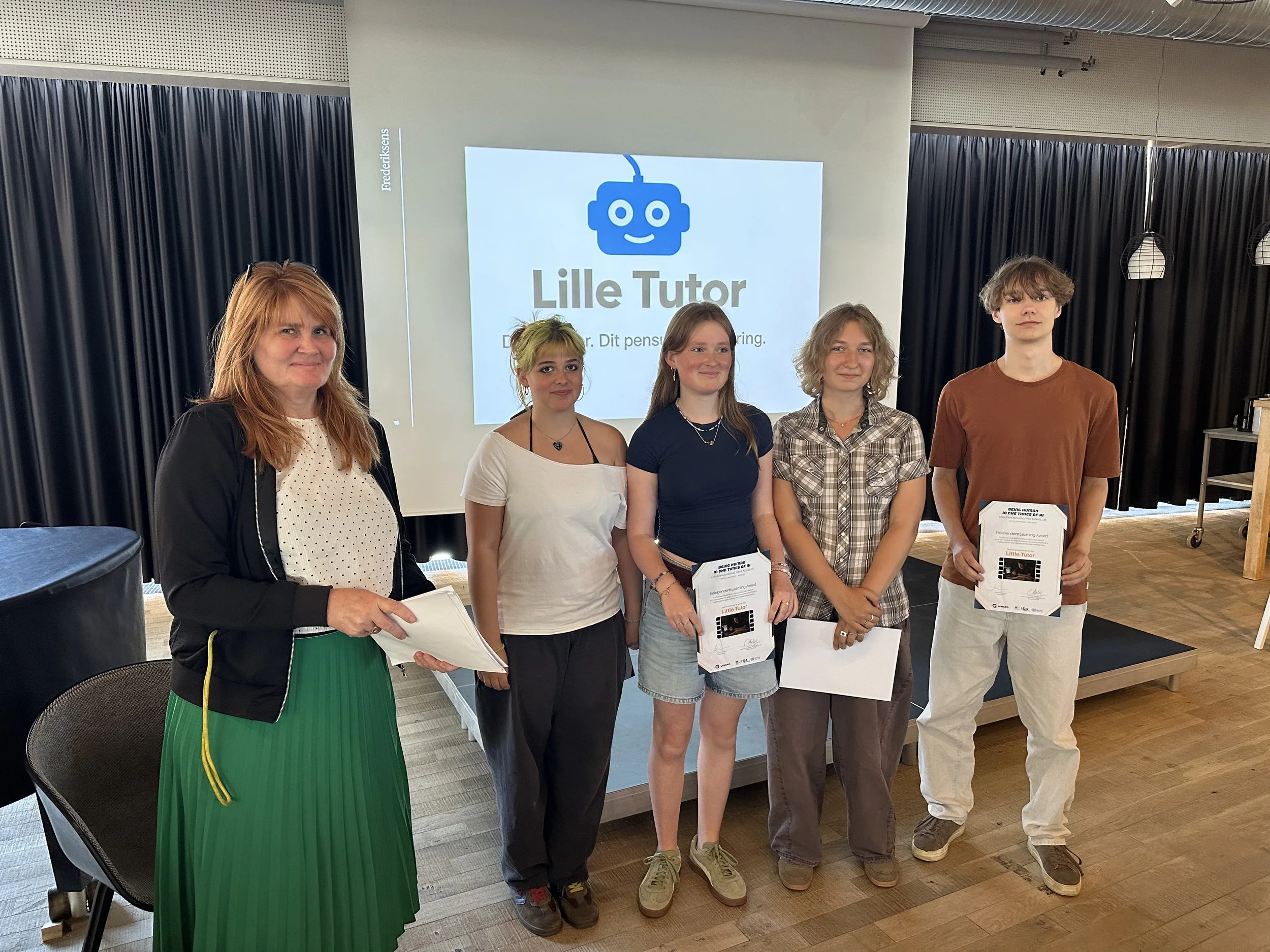
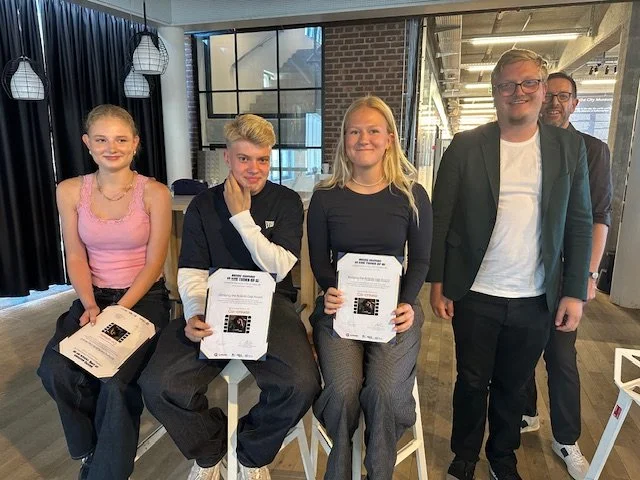
Independent learning award
- Little Tutor
This film won the Independent Learning Award for the team that best demonstrated how over-reliance on AI weakens our ability to learn independently, and offered a creative way to keep curiosity and human learning alive.
Problem: The risk of losing critical thinking and the ability to learn when AI completes our tasks.
Motivation from the jury
The film Little Tutor [00:00:26] addresses the core problem by reversing the role of AI: Instead of providing the final answer, Little Tutor functions as a "virtual partner" [00:00:26] that asks questions, guides, and reflects with the student.
The team delivered a clear vision that the most important part of education is the ability to think independently [00:00:19]. The solution convinced the jury as it ethically and transparently [00:00:47] ensures that AI helps the student to understand [00:00:39] the material, rather than simply skipping ahead [00:00:39] of the learning process.
The team states their core philosophy:
"That takes an AI tool that dares not to give the answer. A partner not a shortcut." [00:01:00]
For the team that shone a light on how over-reliance on AI can weaken our ability to learn on our own and offered a creative way to keep curiosity and human learning alive.
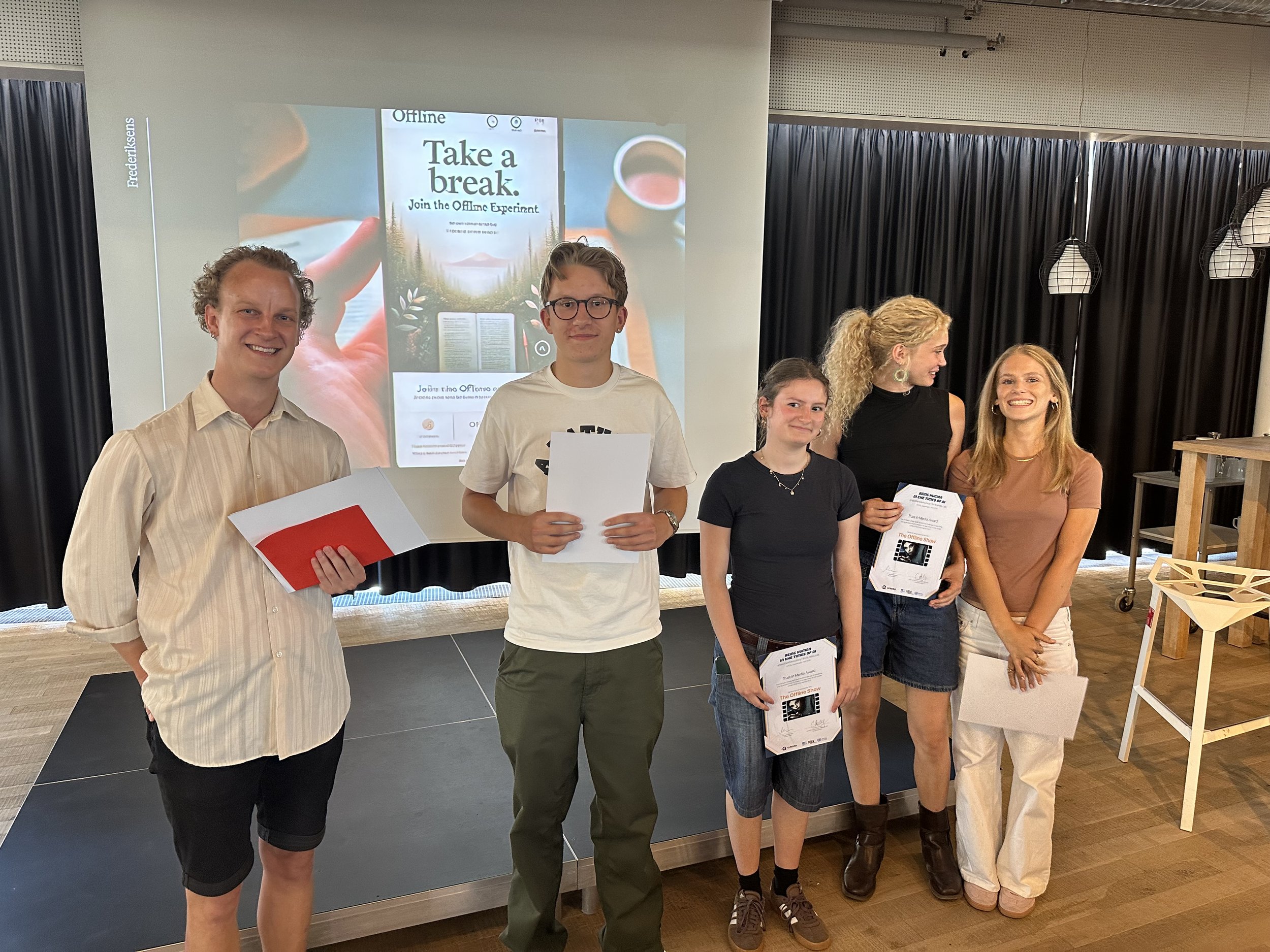
Trust in Media Award
- The Offline Show
This film won the Trust in Media Award for the team whose work tackled the challenge of rebuilding young people’s trust in media in an age when AI can create content that looks real but isn’t.
Problem: AI-generated content is killing media trust.
Motivation from the jury
The film TheOfflineShow [00:00] powerfully highlights the loss of media trust, where users no longer know "what's real and what's just AI mimicking something human" [00:12]. The core of the problem is that social feeds are now filled with content that "looks like the real thing but isn't" [00:32].
The team’s solution focuses on radical transparency and physical reality: Users need to "reconnect with reality" [00:24]and "feel something that's not generated but lived" [00:24]. The Offline Show concept is a bold anti-media approach that forces the user to "stop, to be without a screen, without filters" [00:45]. The jury was convinced by this sharp, counter-intuitive response to the deepfake crisis, arguing that genuine experience is the only defense against synthetic content.
Bridging the Skills Gap Award
- Co-Create
This film won the Bridging the Skills Gap Award for the team that most powerfully showed how to close the growing gap between young people’s AI skills and the demands of the future job market, and inspired a vision for doing it.
Problem: Why our AI skills don't match the job market.
Motivation from the jury
The film effectively captures the core conflict facing creative youth: the fear that the machine is doing the work and the struggle to find the balance between human contribution and AI assistance. The key question for the team was: "How much is me and how much is AI? I want to find the balance."
The winning solution, Co-Create, is an app designed as a creative space where the young filmmaker can "work with AI on their own terms." The team addressed the skills gap by redesigning the AI itself; instead of acting as a shortcut, Co-Create features a personalized AI Coach that guides the user through the entire process, asking important questions like: "What comes from me and what comes from AI?"
The jury recognized that this approach shifts AI from being a threat to being a sparring partner, ensuring the human user, the filmmaker, "is still controlling the narrative" and the overall process. The vision is clear: today's creative user becomes tomorrow's skilled, independent professional.
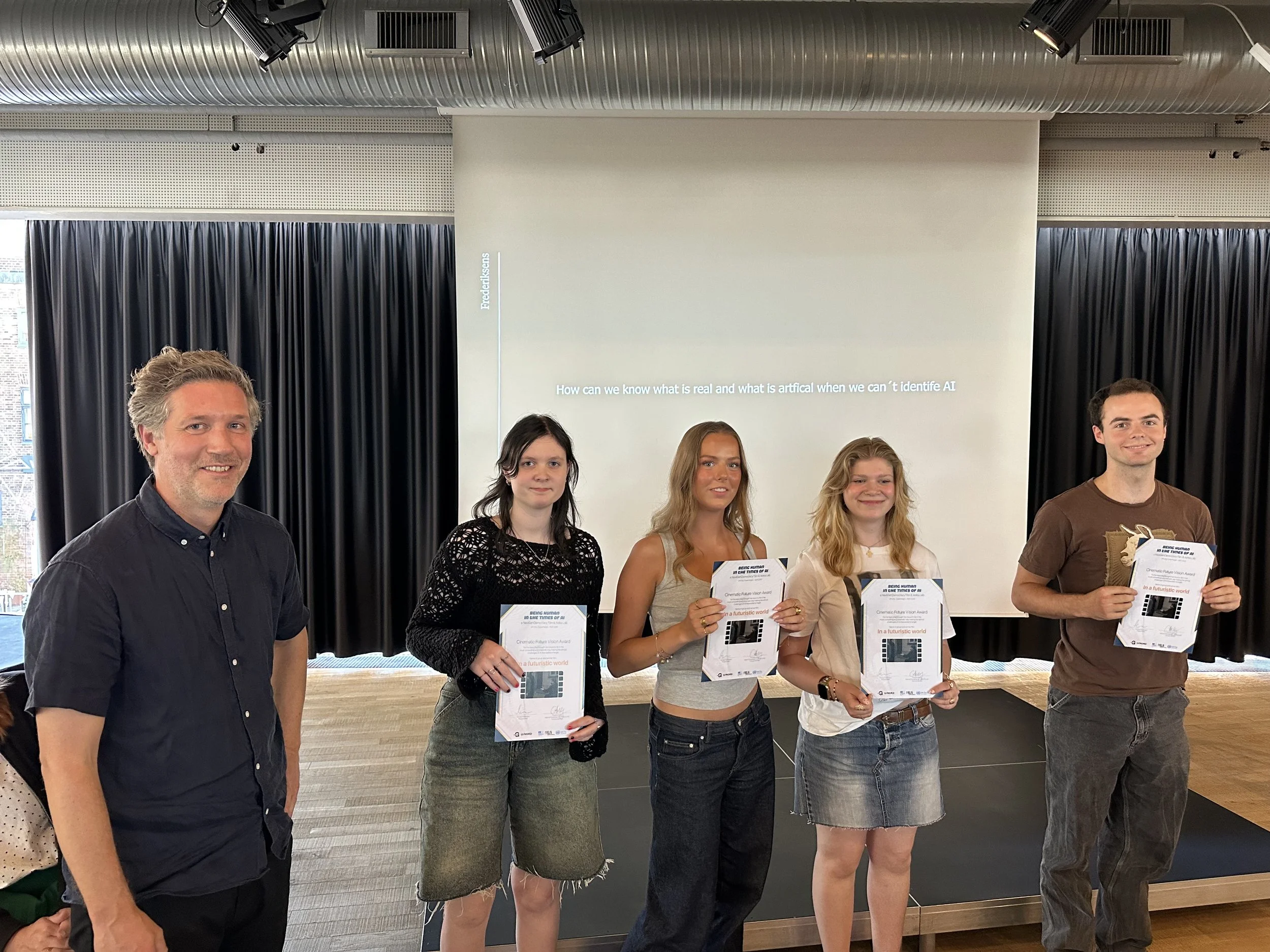
Cinematic Future Vision Award
- In a Futuristic World
This special award was established for the team that brought the future to life in the most compelling and cinematic way, making the ethical challenges of AI impossible to forget.
Motivation from the jury
The film In a Futuristic World did not strictly meet the competition's requirements for problem-solving or delivering a clear, defined media solution. Instead, the jury unanimously agreed to award the team out of sheer enthusiasm for the film's futuristic qualities and powerful visualization of the near future.
The film serves as a chilling warning, depicting a frightening future where the central ethical challenge is the audience's complete inability to discern between reality and fabricated content. The visual execution and compelling narrative created an immersive, disorienting experience that made the abstract risk of AI feel tangible and immediate.
The jury found that this masterful, cinematic approach to visualizing a dystopian scenario achieved the highest level of emotional impact and was an indispensable contribution to the debate on media trust and truth.
3. Learning outcome for students
From cheating with AI to ethical creation
The students' perception shifted fundamentally. From viewing AI as something to "cheat with" to understanding the ethical possibilities within the tool. The resulting films reached a very high standard, showing a good balance between argumentation and creative solution. The visual, creative aspect and the AI-generated video production maintained engagement and created particularly high motivation.
A significant boost in understanding AI
The students gained a markedly expanded understanding of artificial intelligence. Both as a technology and as a societal force. They acquired important readiness and reflective abilities regarding critical thinking about AI and the challenges the technology can entail.
Creative problem-solving and hybrid production
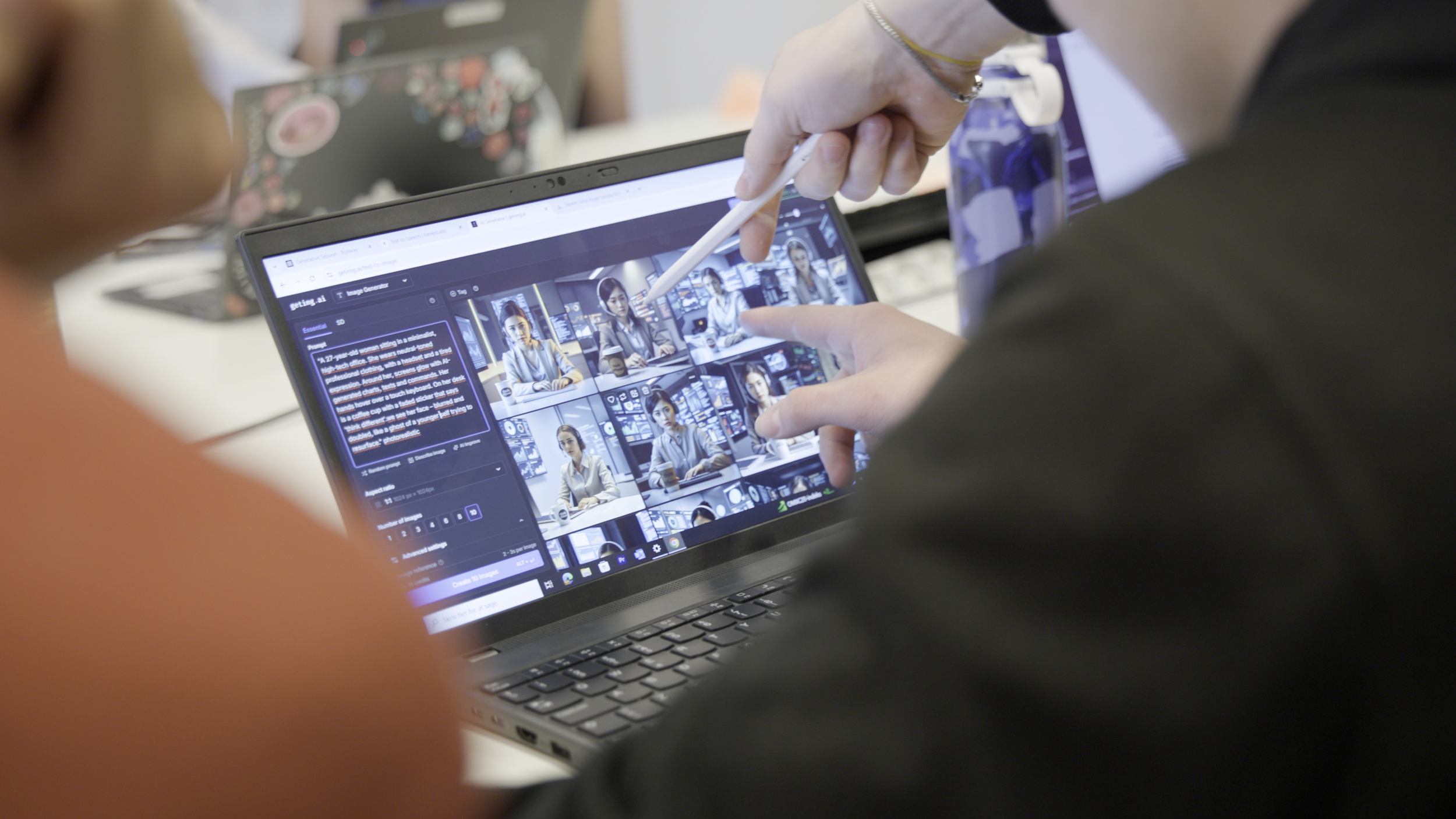
The students mastered new AI tools for developing ideas and tackled problem statements of high relevance. The AI-generated video production stood out as a key strength, driving deep engagement and proving itself as a core element of the concept.
AI tools and ethics in design
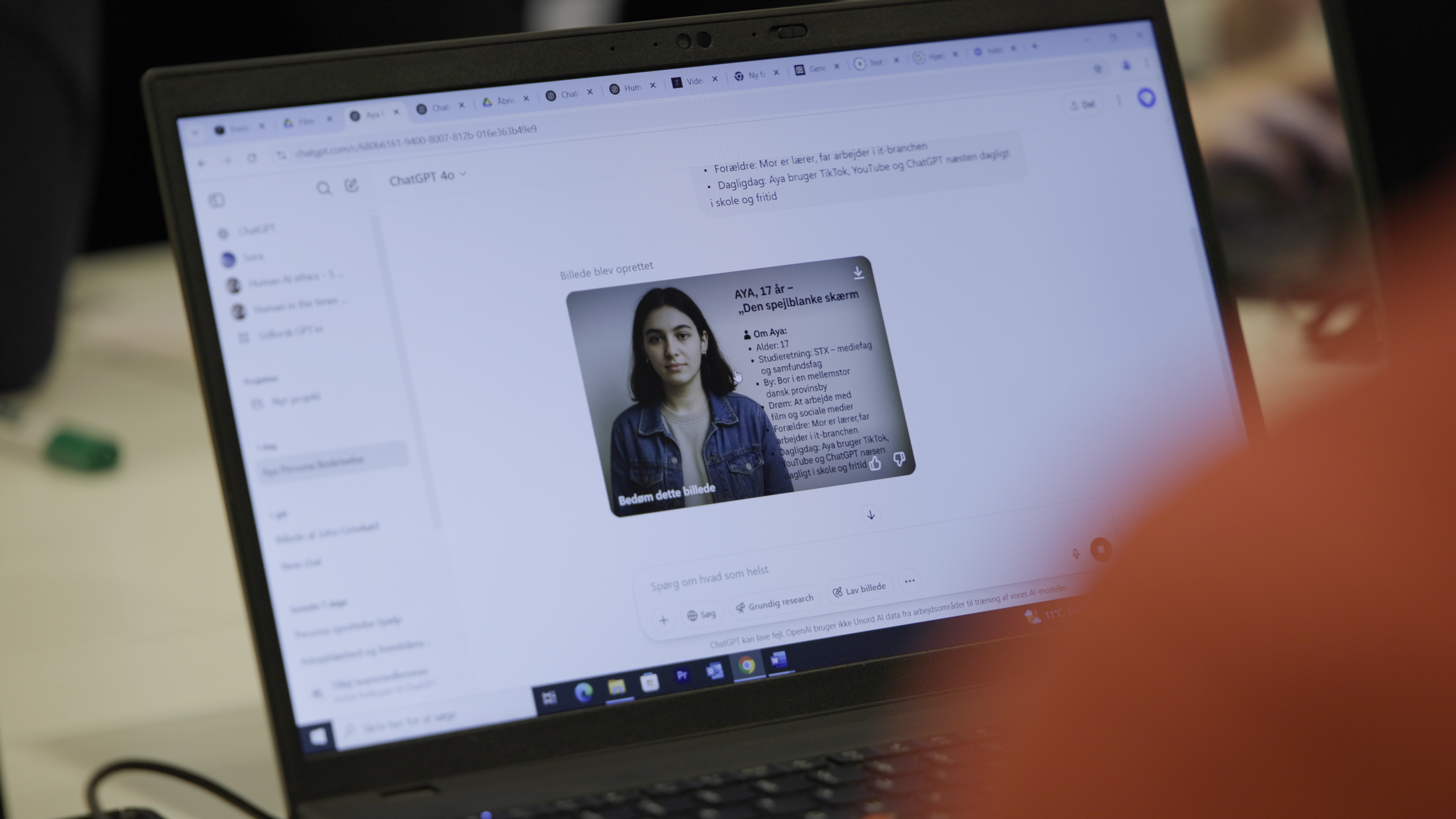
The work with the developed GPTs (CustomGPTs/Agents) worked well and was experienced as relevant and functional. The ethical dimension within the GPTs was perceived as relevant and strong by the students.
U/NORD's solution of providing their own computers, where students could work safely with AI services, was highlighted as a major strength for data security and ethical responsibility.
The student and expert collaboration
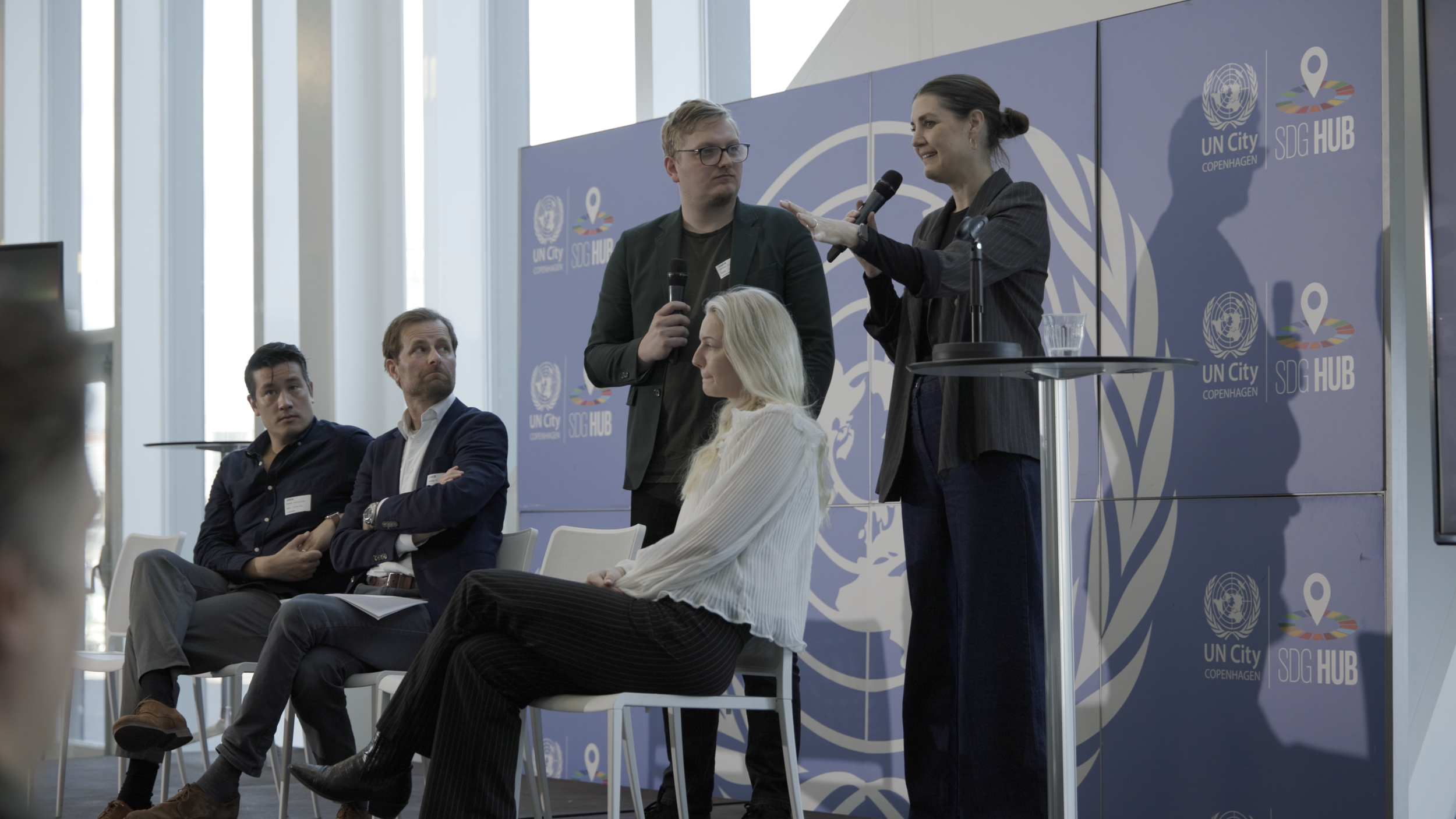
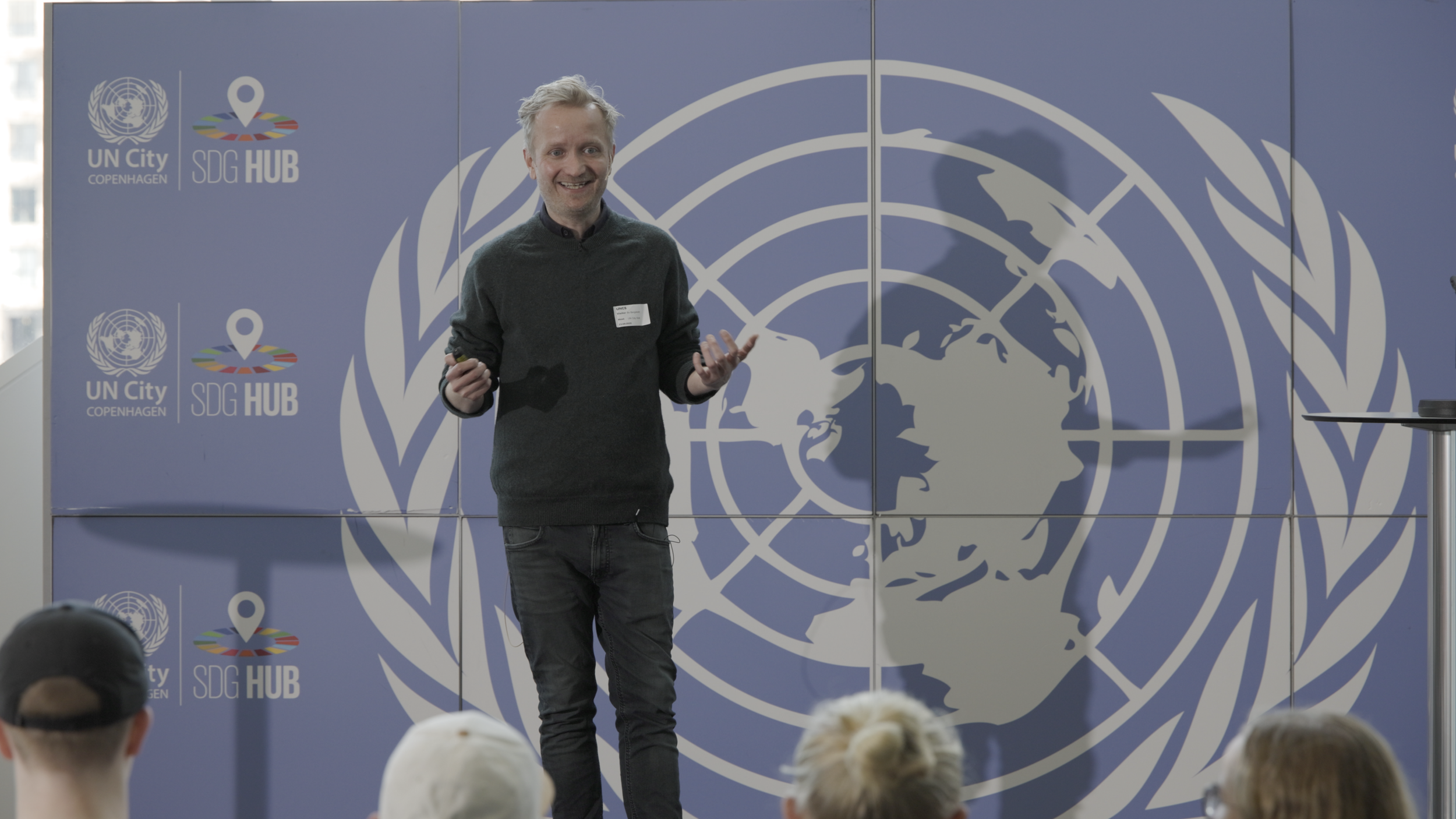
The project's overarching idea and execution were praised, and the concept itself was rated as highly relevant. The inclusion of prominent stakeholders and guest speakers (consisting of individuals with real footing in the professional fields) was highlighted as a major strength and source of inspiration.
The entire setup at the UN City was described as a "fantastic experience" and something special that contributed to student motivation. The clear structure with phases and control worked well and created an effective framework for the students.
Scalability ands willingness to collaborate
There was great enthusiasm and willingness to collaborate among the teachers, and the students generally appeared focused and engaged in the process. The project is assessed as strongly founded with potential for further development, scaling, sustainability, and relevance for future education.
4. Learning outcome lecturers
Surprisingly high intensity
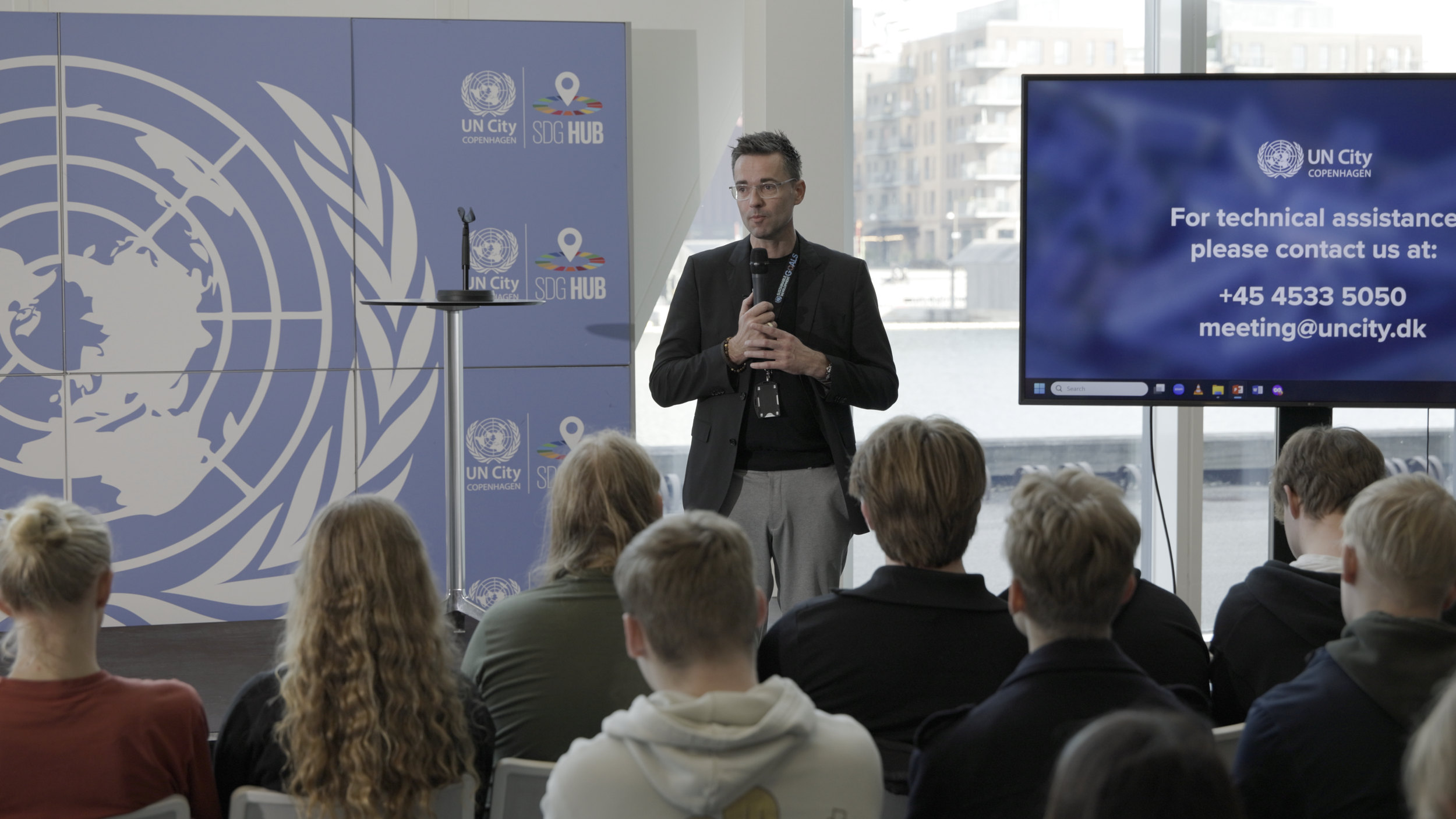
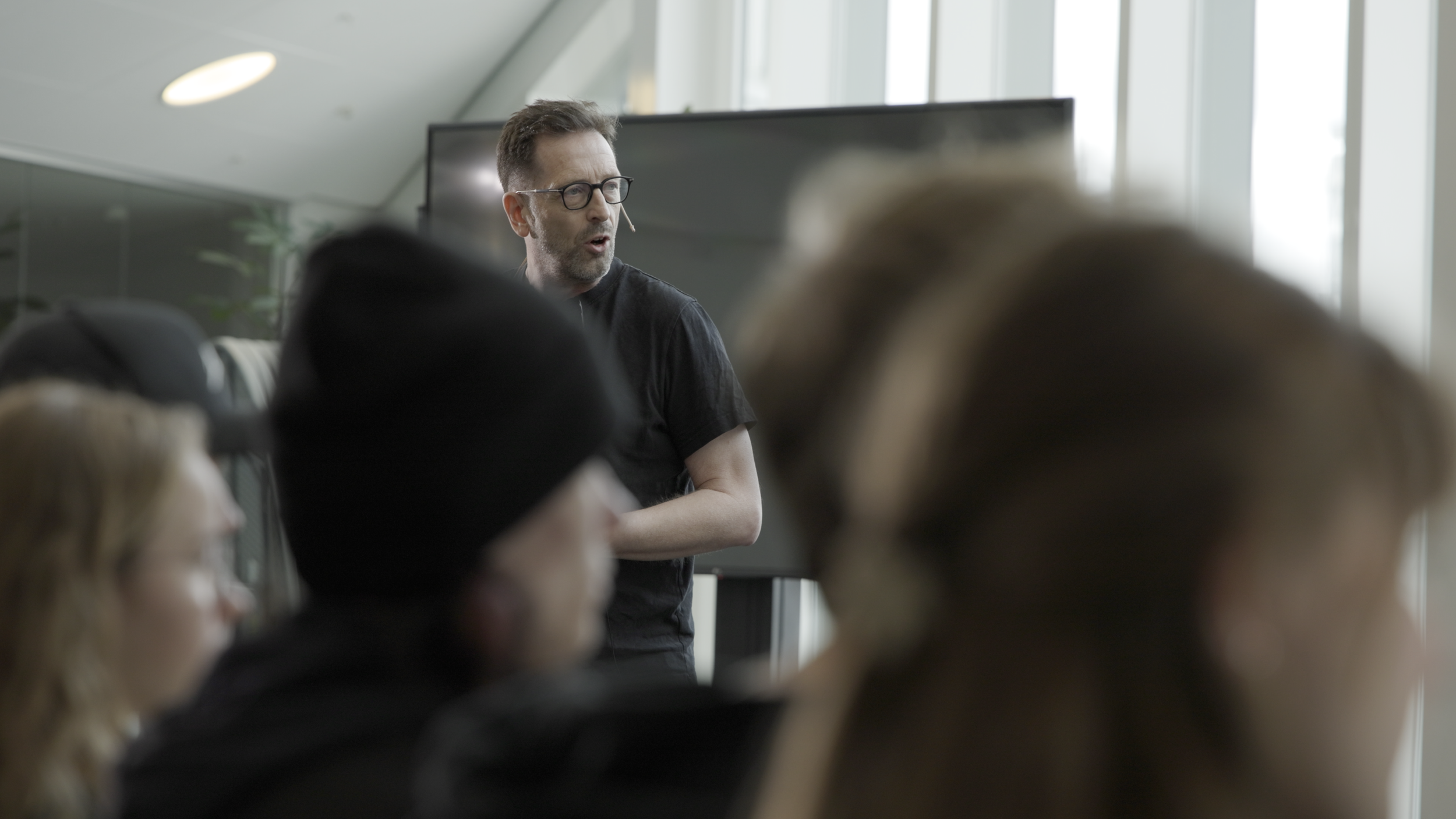
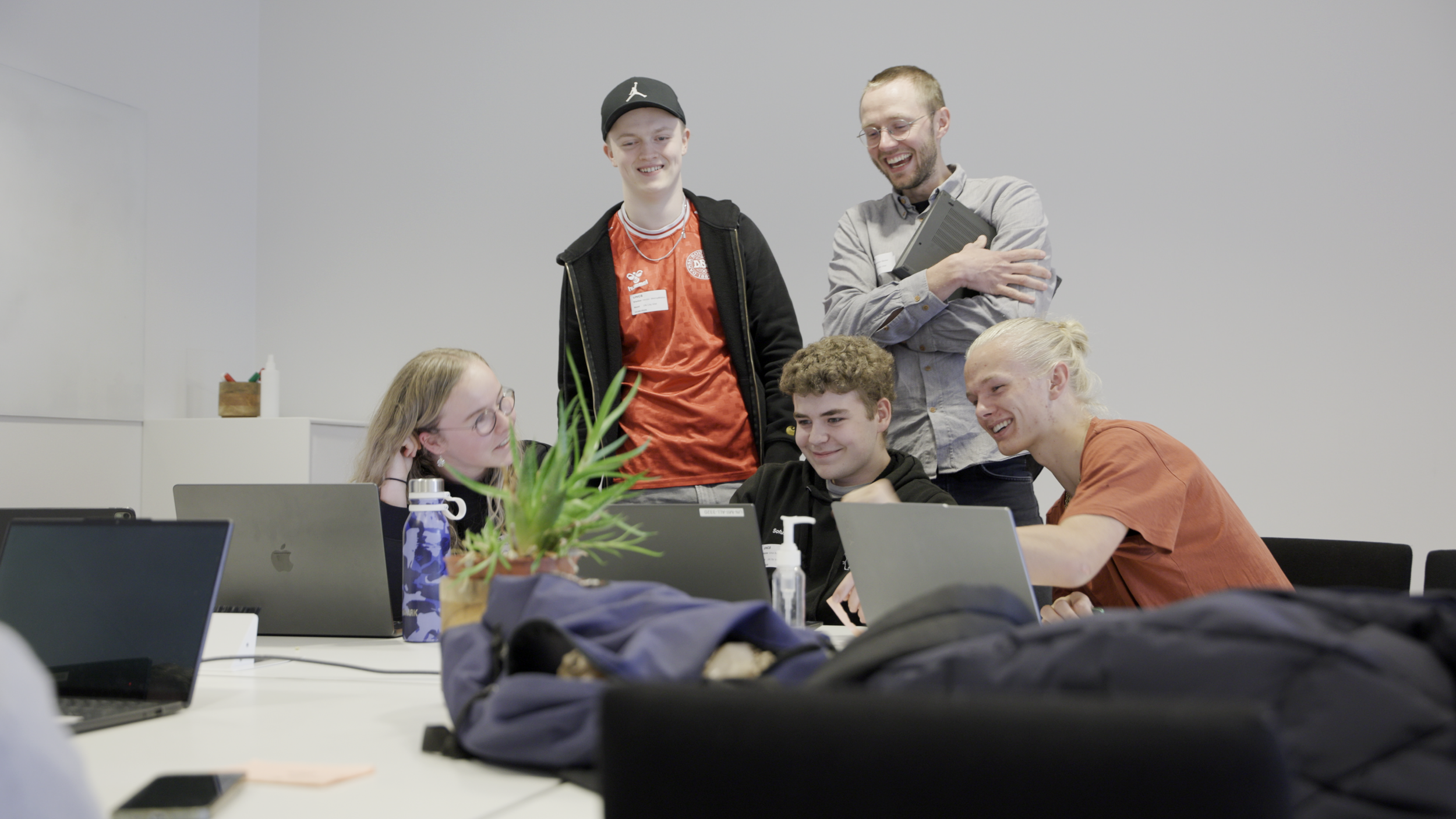
The intensity and pace of the three-day lab surprised the teaching staff, despite previous preparatory miniworkshop before the lab. This created a unique, shared learning environment where teachers often faced the same steep learning curve as the students, mirroring the societal challenge of navigating AI without established educational frameworks.
The learning experience was broad, covering AI software competency (prompting), innovation methodologies, design thinking, and technical aspects of hybrid film production. Although the pace was slightly too high for some 1st-year students (1.g), they quickly adapted to using the various CustomGPTs.
The shared challenge demonstrates that the lab provides a valuable model for future education, where mutual assistance and active engagement are essential for all participants. For the next iteration, the demanding nature of the lab will be even more explicitly communicated beforehand to maximise preparedness and underscore the collaborative learning required to master the process. To ensure smoother onboarding, future planning must address the previous difficulties posed by time constraints in the educational sector and technical blockages such as the U/NORD network initially preventing access to the digital playbook due to its AI content.

5. Film & AIdea Lab
- methodology
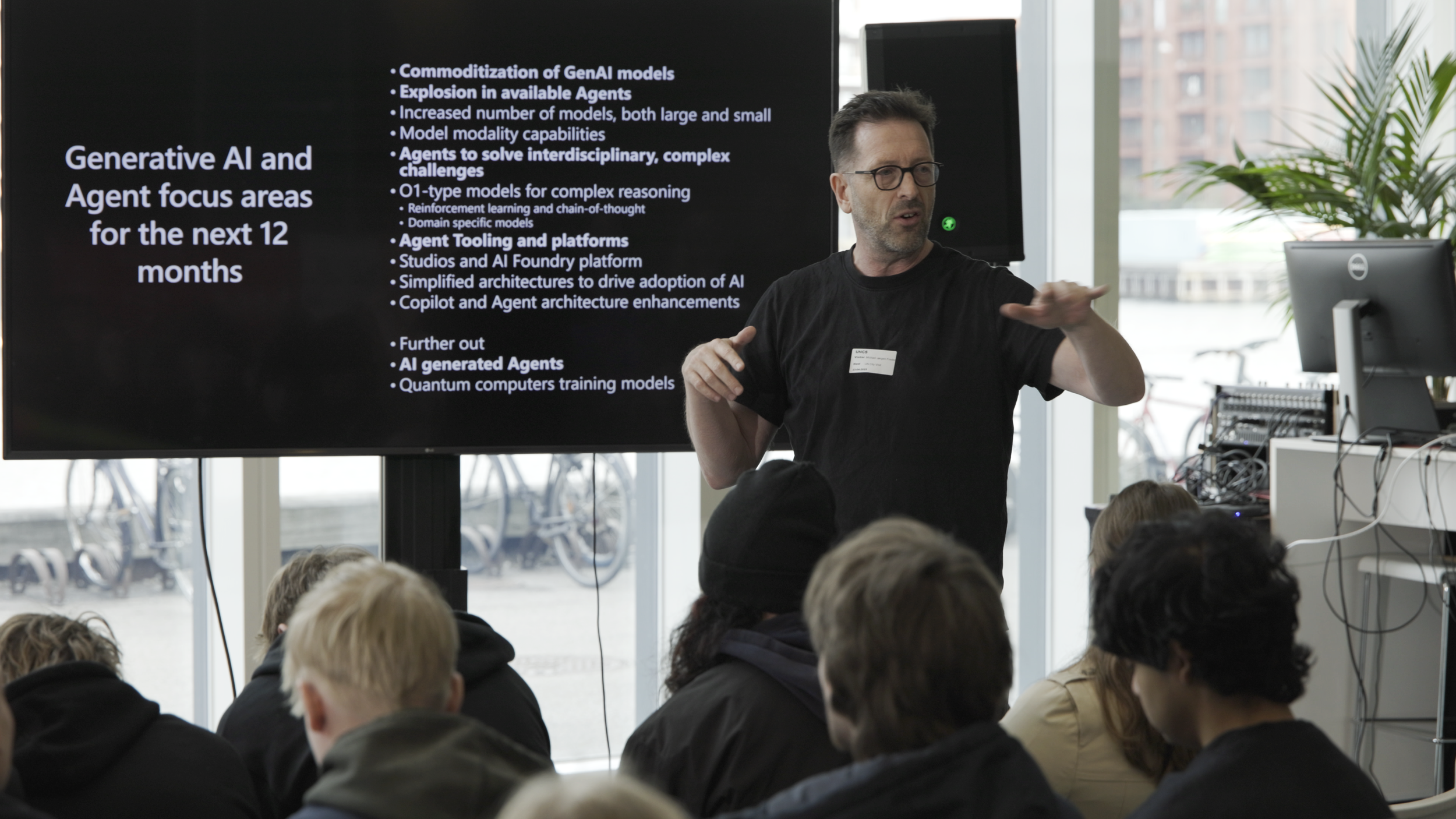
By Michael Frederiksen, Founder & Lab lead
27 Nov 2025
The methodology is tailored for young people to become active shapers of their own future at a time where human identity, culture, and democratic participation are being transformed by AI. The Lab is necessary because education needs their perspective more than ever. The format was developed and is led by Michael Frederiksen, Lab Lead & Inventor of the NextGenDemocracy Film & AIdea Lab format.
Through mastery, students strengthen their critical thinking, creativity, and confidence, providing a proven model for future education.
The core method, developed by Frederiksens since 2020, combines human ethics and AI, strategic planning, design thinking, journalism, and filmic storytelling. It is founded on the Double Diamond innovation process. The key to mastery is a precise focus on one specific problem, making both creativity and filmmaking easier.
Digital playbook for creative process overview
The playbook is the digital focal point that guides students step-by-step through all phases of the design thinking process.
It ensures that all AI tools and guidelines for hybrid film production and innovation are integrated into one cohesive learning sequence.
The lab unfolds over three intensive days
Day 1 focuses on problem understanding (Discover/Define). Students use Empathy Mapping to identify ethical "pains" and determine the root cause of AI challenges.
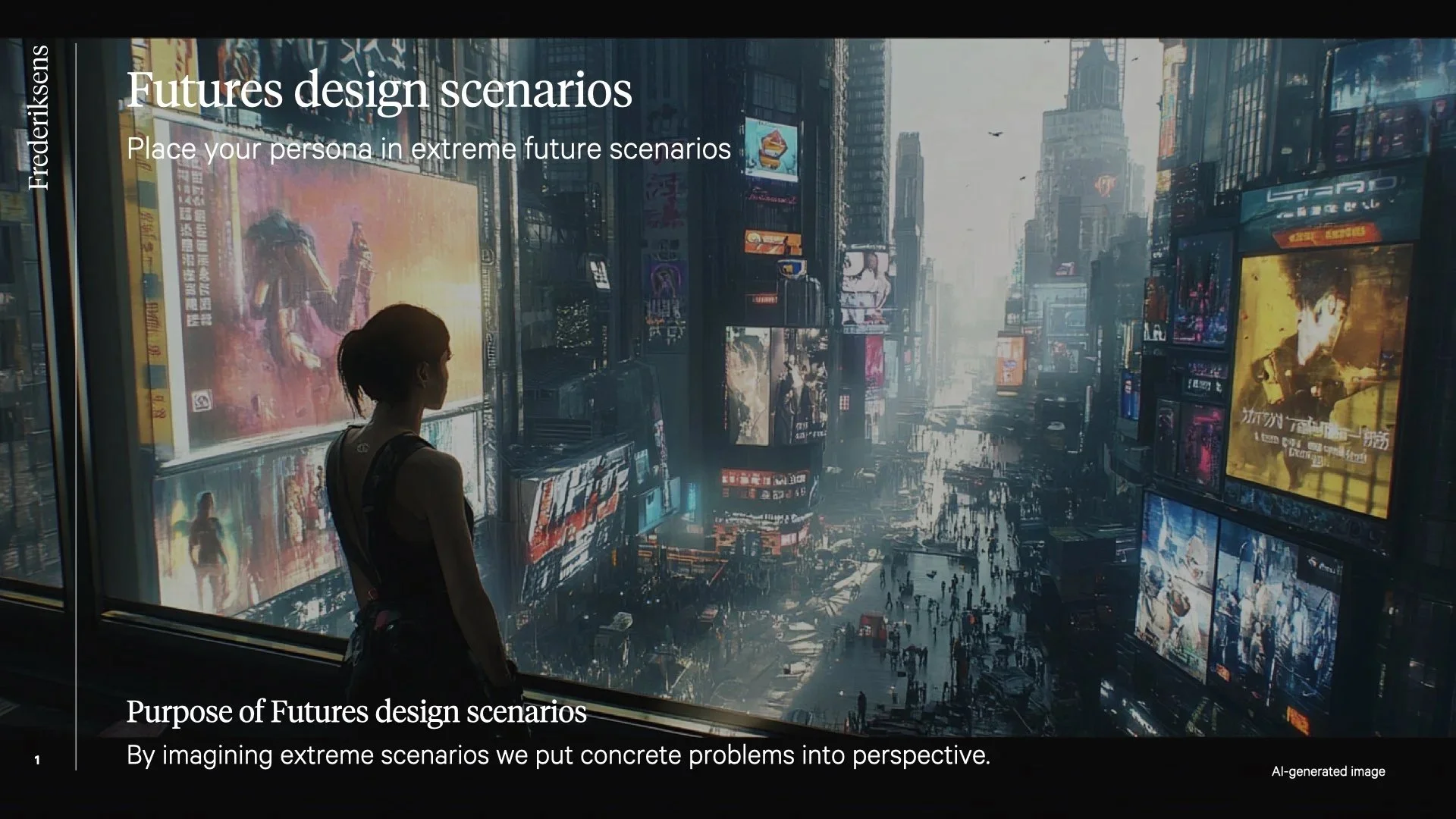
Day 2 is dedicated to creative development (Ideation). AI is integrated for idea generation in various expert roles , and concepts are refined through feedback from specialists and testing on synthetic personas.
Day 3 culminates in producing a maximum 2-minute case film to sell the solution. All processes are fully supported by Generative AI, utilizing a hybrid production model (traditional footage + AI clips).
6. Facts about this lab
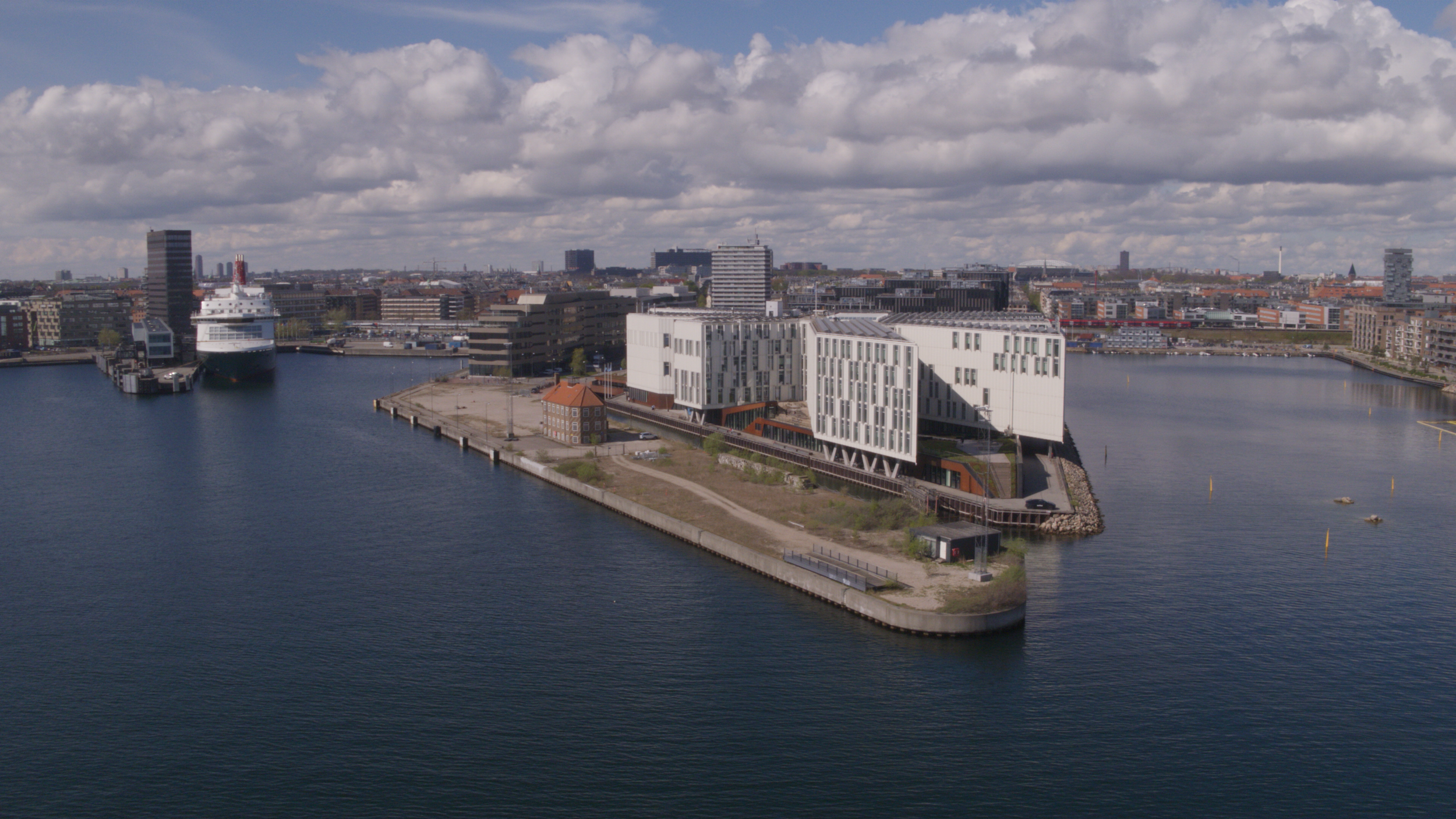
Duration and location: A 3-day lab held at UN City in Copenhagen.
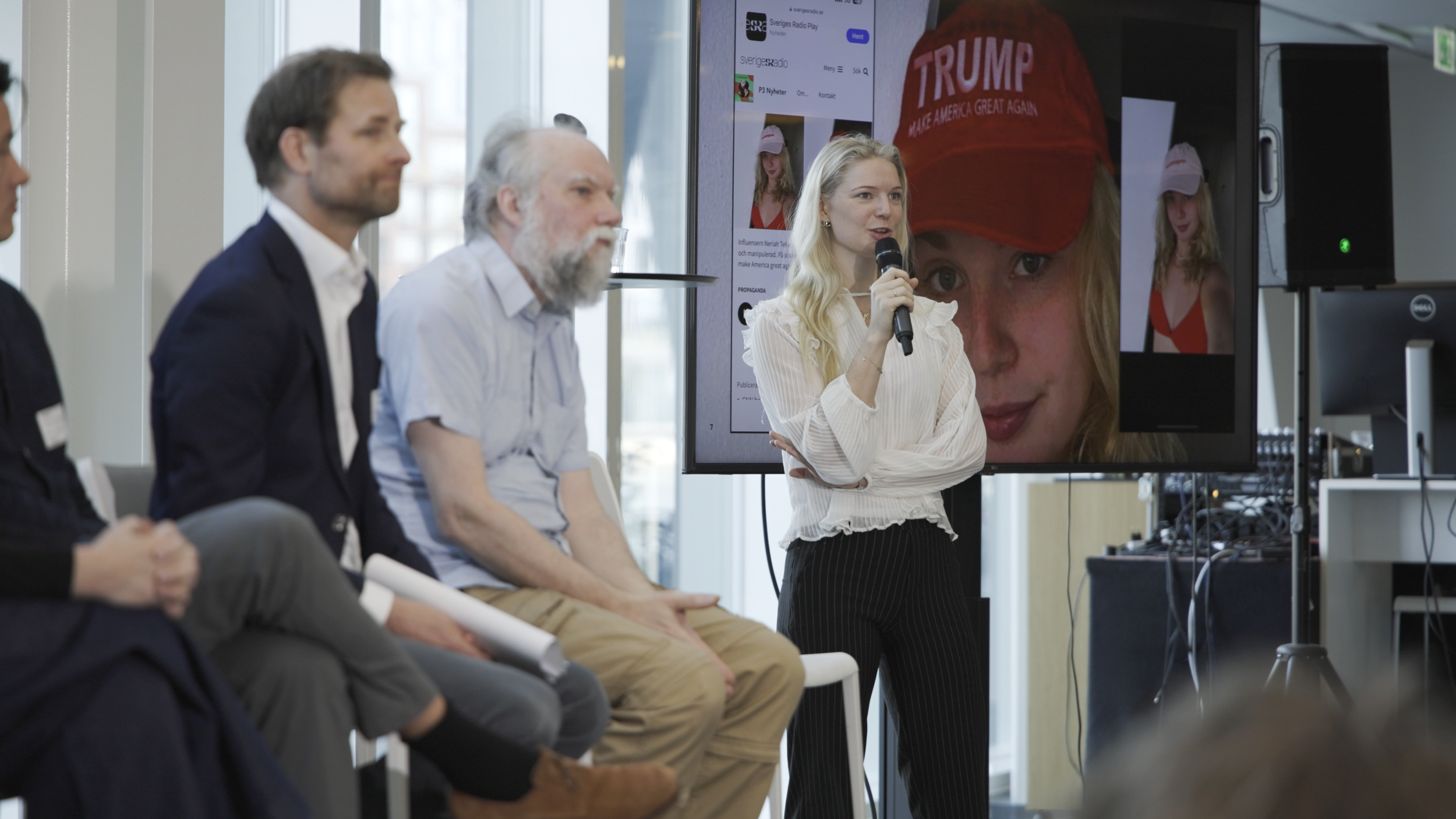
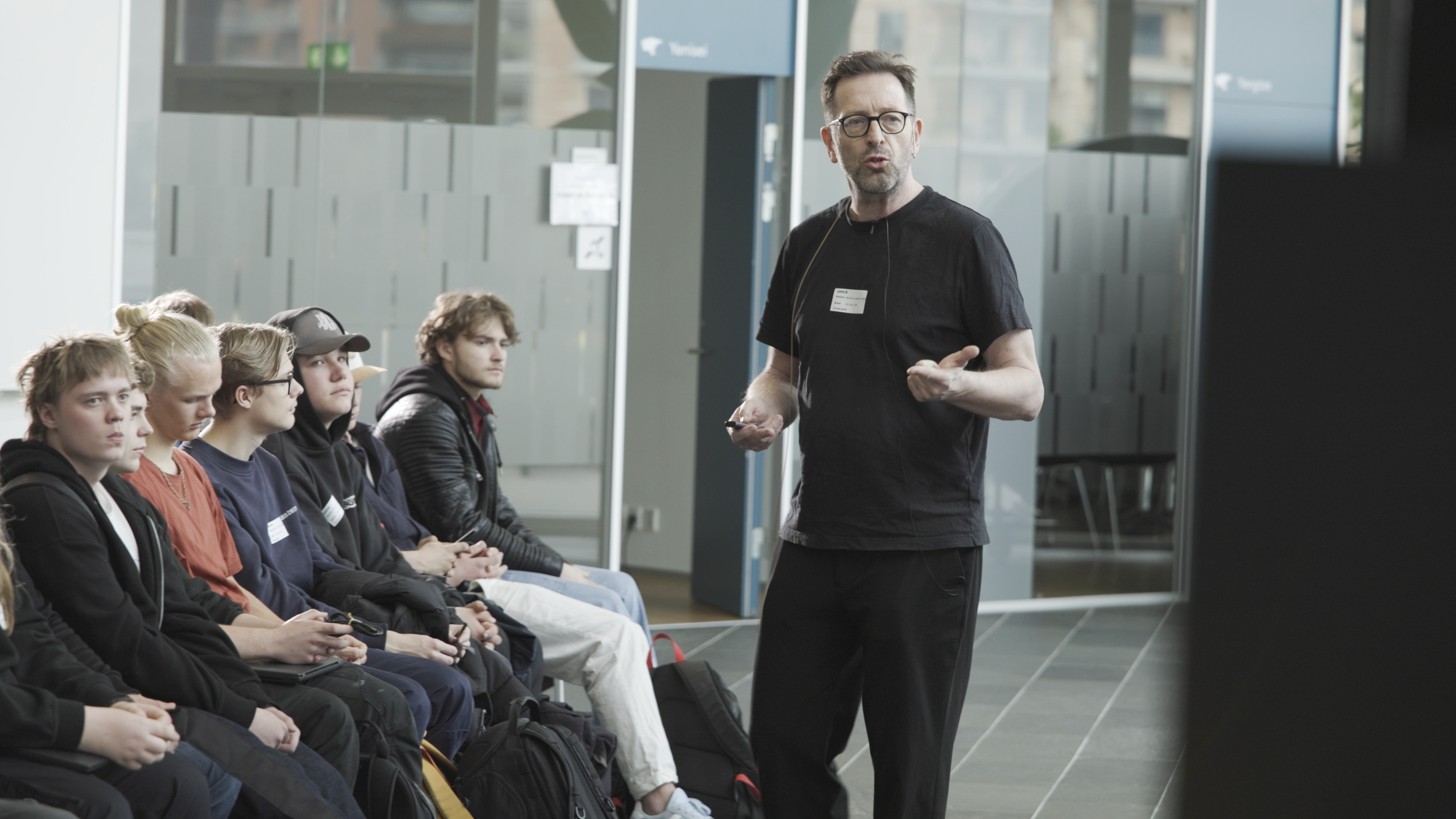
Participants: 50 students from high schools U/NORD (Hillerød) and Nørre Gymnasium (Brønshøj). Lecturers, consultants, school leaders, PR staff.
Main partner: In partnership with the UNESCO Associated Schools Network and the high schools.
Funding: Supported by The Danish Film Institute.
Expertise: Guest speakers from leading tech and media companies, including Google Denmark, Microsoft Denmark, and TV 2 Denmark.
Media coverage: Featured in Danish news coverage by TV 2 Kosmopol.
Conclusion: Award ceremony held at the Culture Yard in Elsinore, in collaboration with the library and Google.
Societal focus: Presentations from civil society and industry organizations (e.g., Save The Children and Danish Industry Association).
Dissemination: Presentation of the results and process for the UNESCO Associated Schools Network in Denmark by students from the schools and the Lab Lead.